

Tortilla Stockout Reduction for Foodservice Buyers

Updated: Oct 2
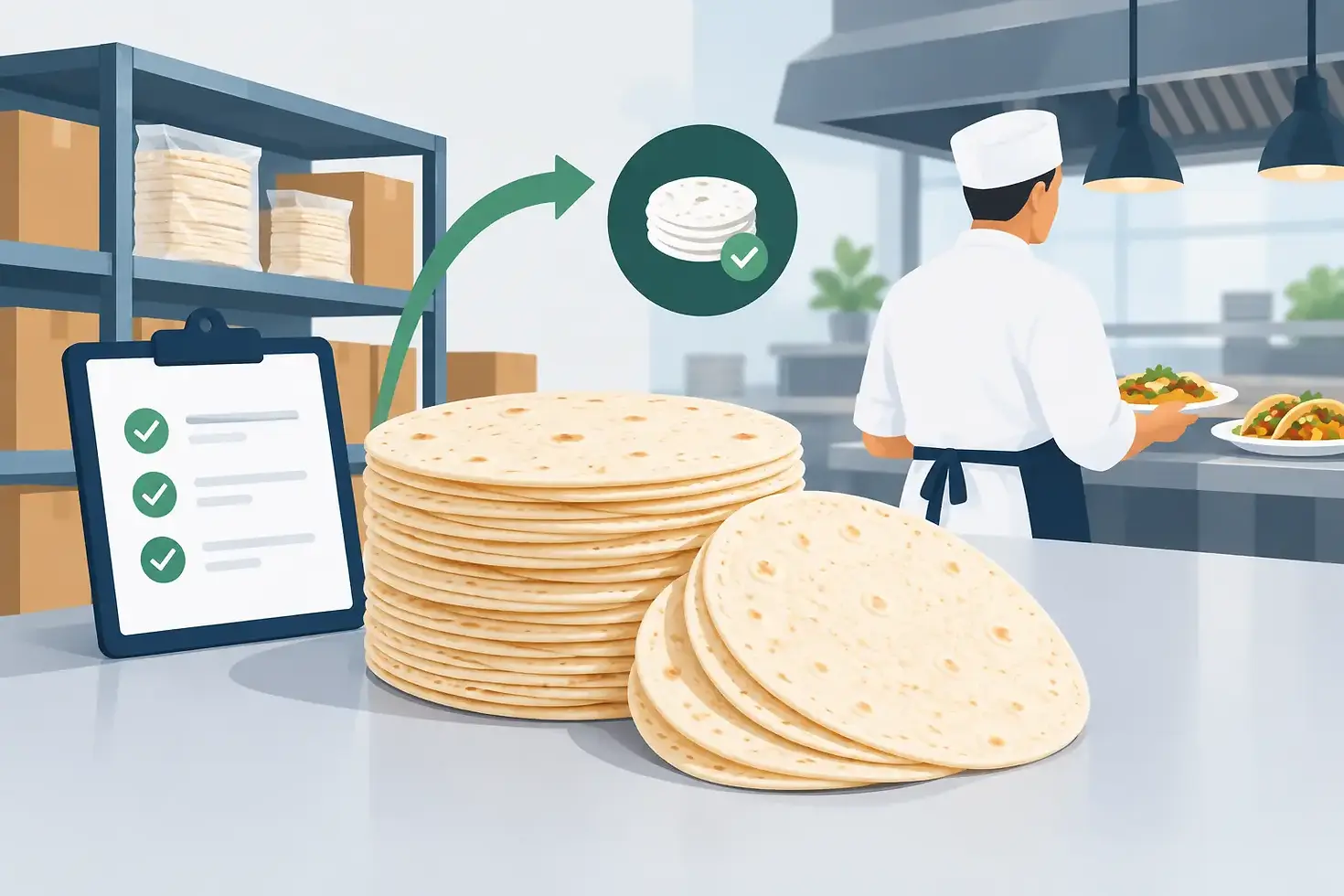
A tortilla shortage is rarely just one missed item on an order sheet. For a restaurant, it can mean changing a menu, slowing service, or disappointing regular customers who expect tacos, quesadillas, wraps, and other familiar offerings to be available. For a grocery retailer, an empty tortilla shelf can send shoppers to another store and reduce sales across the entire Latin food basket. Tortilla stockout reduction starts by treating tortillas as a high-velocity, business-critical product rather than a routine dry grocery line.
Demand can move quickly. Weekend traffic, local events, promotions, seasonal gatherings, and a new menu item can all increase tortilla usage with little warning. The most effective response is not simply carrying more inventory. It is building a replenishment process that matches the product’s shelf life, delivery schedule, storage capacity, and actual customer demand.
Why Tortilla Stockout Reduction Matters
Tortillas often drive purchases beyond their own category. A restaurant that cannot serve its core tortilla-based items may also sell fewer proteins, salsas, beverages, and sides. A retailer with an empty shelf may lose the related sale of beans, sauces, seasonings, cheese, and prepared foods. The financial impact is larger than the unit margin on the missing package.
There is also a trust issue. Commercial buyers need their suppliers to understand that consistent availability matters as much as product authenticity. A tortilla that performs well on the grill or holds up during service is valuable, but it must also be available when the kitchen needs it. Similarly, retailers need reliable case availability in the sizes and formats their shoppers recognize.
At the same time, overstocking creates its own problem. Tortillas have a finite selling window, and excess inventory can lead to waste, markdowns, or quality concerns. Stockout reduction is therefore a balancing exercise: hold enough inventory to protect sales without tying up cash or storage space in product that will not move in time.
Start With Demand, Not Guesswork
The first step is to review tortilla movement by product, size, and customer use. Do not combine every tortilla into one broad number. A small corn tortilla, a large flour tortilla, and a specialty format can have very different sales patterns and lead times.
Restaurants should look at weekly usage rather than relying only on a recent order. Track how many cases are used during normal weeks, then compare that number with high-demand periods. If Friday through Sunday accounts for a large share of volume, ordering based on weekday usage will leave the operation exposed before the busiest service periods.
Retailers should review point-of-sale movement by store, package size, and day of week. A product that appears slow on a monthly report may sell quickly immediately before weekends or holidays. That pattern affects when inventory should arrive, not just how many cases should be ordered.
A useful forecast combines three inputs: historical sales, known upcoming demand, and recent changes in the business. Historical sales establish the baseline. Upcoming demand includes promotions, catering commitments, holidays, and neighborhood events. Recent changes include expanded operating hours, a new menu, a new store account, or stronger traffic in a particular area.
Forecasts do not need to be complicated to be useful. A buyer who updates expected usage every week will usually make better decisions than one who relies on a fixed par level for months. The goal is to spot demand changes early enough to adjust the next order.
Separate Core Items From Occasional Sellers
Not every tortilla deserves the same inventory policy. Core items are the products customers expect to find every week and that support the highest-volume menu or shelf activity. These need stronger protection through dependable reorder points and regular review.
Occasional sellers may be worth carrying for assortment, but they should not consume the same safety stock as proven fast movers. A broad selection supports authenticity and customer choice, yet too many slow-moving formats can crowd out the products that prevent the most damaging stockouts.
For many buyers, the right approach is to protect a focused group of core tortilla SKUs while ordering specialty items in quantities that reflect their real demand. This keeps the assortment credible without creating unnecessary inventory risk.
Set Reorder Points That Reflect Delivery Reality
A reorder point is the inventory level that triggers the next purchase. It should not be based on a feeling that stock is getting low. It should reflect how much product will be used before the next delivery can arrive, plus a sensible buffer for demand variation.
For example, if a restaurant uses four cases of a specific tortilla per week and receives deliveries twice weekly, its reorder point must cover expected usage until the next scheduled route. If weekend demand is higher, the buffer should account for that increase. A retailer with a longer gap between deliveries may need a larger buffer, particularly for top-selling package sizes.
The correct buffer depends on the operation. High-volume restaurants with predictable sales may need less protection than a retailer running promotions or serving a rapidly changing customer base. A buyer with limited refrigerated or dry storage also has to balance availability against space. There is no single case quantity that works for every account.
Review reorder points whenever one of these factors changes: delivery frequency, sales volume, menu mix, promotion plans, storage capacity, or supplier availability. A reorder point is not a permanent setting. It is a working control that should move with the business.
Use Scheduled Deliveries as an Inventory Tool
Consistent delivery routes give buyers more control over inventory. Instead of building every order around a large monthly purchase, foodservice operators and retailers can plan around regular replenishment. This can reduce the need to overbuy while maintaining coverage on core lines.
For GTA buyers, scheduled local delivery can be especially useful when demand shifts during a busy week. Restaurants in Toronto, Mississauga, Brampton, Vaughan, Scarborough, and surrounding areas often operate with tight storage and fast turnover. Clear order cutoffs, reliable communication, and a known delivery cadence help managers order with greater confidence.
Terragusto Products Inc supports commercial buyers with established sourcing relationships and scheduled delivery service across the GTA. For tortilla purchasing, the practical value is straightforward: a distributor that understands Latin product demand can help buyers maintain continuity across the formats and brands their customers expect.
Build a Backup Plan Before You Need One
A backup plan should protect the customer experience without forcing a last-minute switch to an unsuitable product. Start by identifying acceptable alternatives within each tortilla category. A substitution may work when size, ingredient profile, handling performance, and intended use remain close enough for the operation. It may not work when a specific product is central to the menu or a retailer’s customer base expects a particular format.
This is where product knowledge matters. A foodservice operator should know which available alternatives can support the same service application. A retailer should know which package sizes or related formats can maintain shelf coverage if one item is temporarily constrained. The decision should be made in advance, not during a rush order.
Communication is equally important. Purchasing staff, kitchen managers, store receivers, and distributor contacts should share the same information about critical items, projected demand, and acceptable substitutions. When a buyer waits until inventory reaches zero, the available options become much narrower.
Improve Receiving and Shelf Checks
Some stockouts are not caused by purchasing. Cases may be delivered but not received correctly, stored in the wrong area, or left in the back while the shelf or kitchen station appears empty. A simple receiving process protects against these avoidable gaps.
Confirm delivered quantities against the order, rotate inventory by date, and place high-turn products where staff can access them quickly. Retail teams should check tortilla shelves before peak shopping periods, not only during a general daily walk-through. Restaurant managers should include tortilla counts in their pre-service preparation, especially ahead of weekends and catered events.
A short count of critical SKUs can prevent a long service problem. The best time to discover that tortilla inventory is low is when there is still time to replenish it.
Measure the Right Results
Track stockouts by SKU, not just total inventory value. A business may have plenty of product on hand while still missing the one tortilla format that drives its highest-volume sales. Record how often each core item reaches zero, how long it remains unavailable, and whether the shortage resulted in substitutions, lost sales, or waste elsewhere.
Also review ordering accuracy. If actual usage regularly exceeds the forecast, determine why. The answer may be a promotion, a growing customer base, poor portion control, a new sales channel, or an outdated par level. The purpose of measurement is not to blame staff. It is to improve the next order.
Reliable tortilla availability comes from routine discipline: accurate counts, realistic forecasts, timely ordering, and a supply partner that communicates clearly. When those habits are in place, buyers can spend less time solving urgent shortages and more time serving the customers who return for authentic products they can count on.


Comments