

Food Wholesalers for Latin Product Supply

A missing case of tortillas, a favorite snack brand that suddenly disappears from the shelf, or an ingredient substitution that changes a menu item can create more than a small inconvenience. For restaurants and retailers, food wholesalers are a key part of protecting product consistency, controlling inventory, and meeting customer expectations.
When the category is Latin American food, the choice of wholesale partner matters even more. Customers recognize familiar flavors, trusted brands, and culturally specific pantry staples. A general distributor may carry a limited selection, but a knowledgeable Latin food wholesaler can help buyers stock products that feel authentic and sell with confidence.
What Food Wholesalers Should Deliver
A food wholesaler does more than move cases from a warehouse to a business. The right partner supports practical purchasing decisions: which products to keep in regular rotation, what to order for seasonal demand, and how to avoid tying up cash in inventory that moves too slowly.
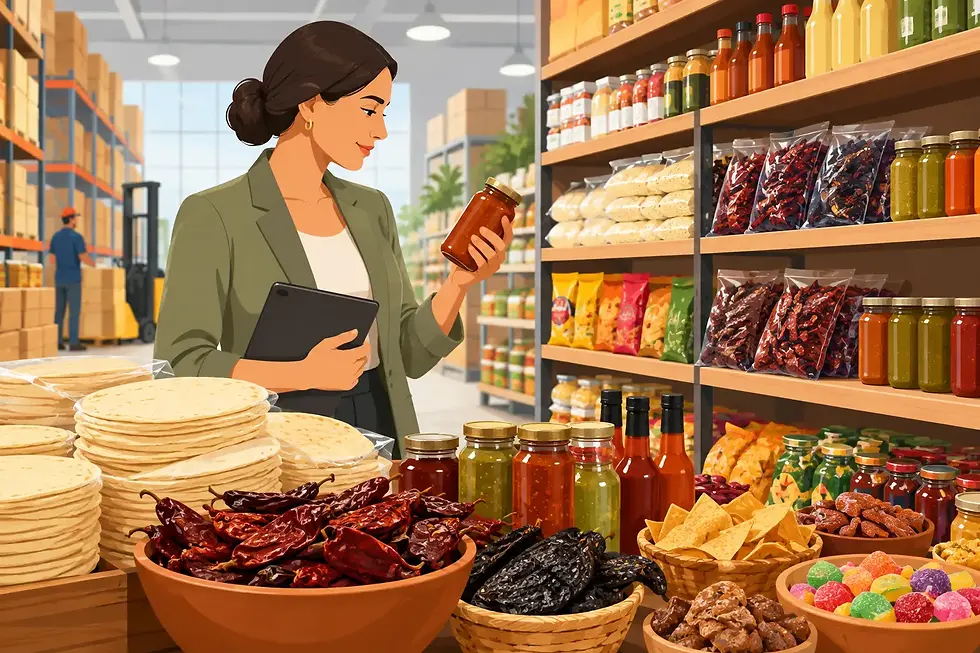
For a supermarket buyer, that may mean maintaining a dependable selection of corn flour, dried chiles, sauces, seasonings, beverages, cookies, candy, and snacks. For a restaurant or foodservice operator, it may mean having reliable access to tortillas, condiments, grains, soup products, and other ingredients that support a consistent offering.
The best wholesale relationship combines product knowledge with operational discipline. Buyers need clear communication, competitive pricing, accurate order handling, and a distributor that understands the difference between a product that is merely available and one that belongs in a Latin assortment.
Authenticity Is a Purchasing Requirement
Latin food is not one single category. Mexican pantry staples, Colombian products, Central American snacks, South American beverages, and regional seasonings all have distinct customer expectations. Product labels, flavor profiles, pack sizes, and brand recognition can affect whether an item earns repeat purchases.
Authenticity should therefore be treated as a buying standard, not a marketing phrase. A wholesale supplier with established relationships with South American and U.S. vendors is better positioned to offer recognizable products and maintain a relevant assortment. This is particularly valuable for independent grocers and restaurants that cannot rely on broadline suppliers to understand specialized Latin categories.
Well-known products can also make merchandising easier. Brands such as Takis, Bimbo, Gansito, Kuii, and Diana are familiar to many shoppers and can add immediate recognition to a snack, bakery, or grocery display. The right mix depends on the customer base, available shelf space, and whether the goal is everyday pantry shopping, impulse purchases, or foodservice use.
How to Evaluate Food Wholesalers for Your Business
The lowest quoted cost is only one part of the decision. A supplier that offers a narrow range, requires excessive ordering, or communicates poorly can create higher operational costs over time. A more useful approach is to evaluate wholesalers based on how well they fit your purchasing pattern.
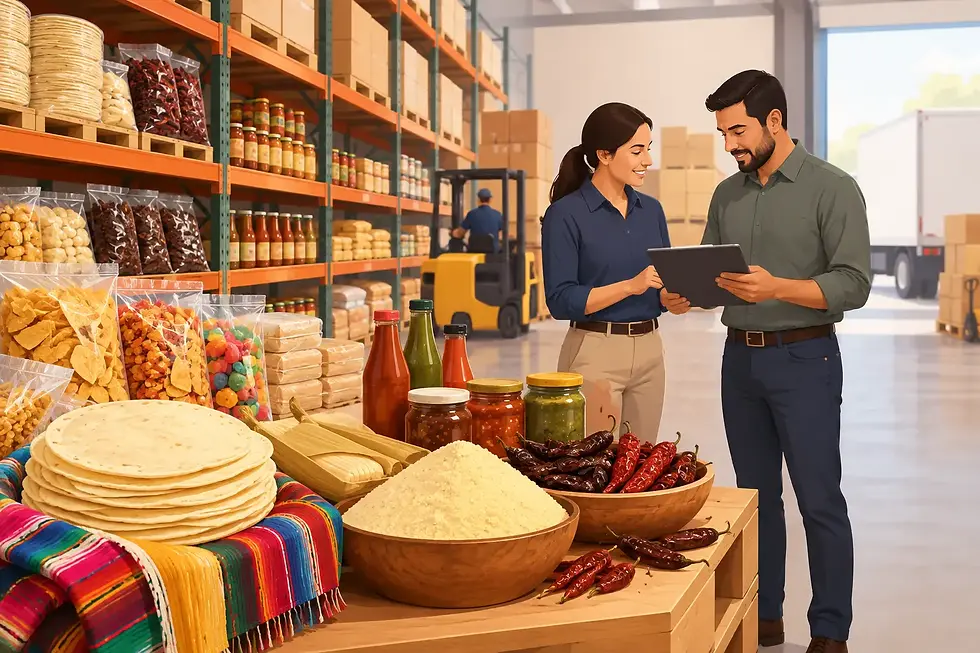
Start with assortment depth. A supplier should cover core categories without forcing you to source every specialty item from a separate vendor. For Latin food buyers, this may include tortillas, masa harina, dried chiles, sauces, spices, chips, sweets, beverages, fish, grains, condiments, natural products, and household essentials. A broader category range helps simplify purchasing and lets retailers build a more complete shopping experience.
Next, consider order flexibility. High minimum orders may work for large supermarket chains, but they can be difficult for independent restaurants, newer grocery stores, and operators testing a new category. No minimum order gives buyers more control. It allows a business to replenish fast-moving items, trial products in sensible quantities, and respond to changing demand without overstocking slower lines.
Delivery coverage should also match how your business operates. Scheduled delivery routes are often more useful than vague promises because they allow buyers to plan receiving, shelf replenishment, and kitchen inventory around a dependable routine. For businesses across the GTA, Kitchener-Waterloo, and London, Ontario, local route coverage can reduce the complexity of coordinating multiple suppliers.
Finally, assess responsiveness. Questions about availability, substitutions, new products, or an urgent restock need direct answers. A wholesale partner should be easy to reach and capable of helping buyers make sound choices without unnecessary back-and-forth.
Build an Assortment That Matches Demand
A successful Latin food section is rarely built by ordering every available item at once. It starts with recognizable essentials, then expands based on customer demand and sales patterns. This approach is useful for both stores and foodservice businesses because it protects cash flow while creating room to test new products.
For grocery retailers, begin with foundational categories that encourage repeat visits. Corn flour, tortillas, sauces, seasonings, dried chiles, beans and grains, beverages, snacks, and sweets can form a strong base. From there, add regional products based on the communities you serve and the questions customers ask in store.
Snack and confectionery products deserve careful attention. They can move quickly, attract younger shoppers, and create strong impulse sales near checkout or in dedicated displays. However, variety without organization can make the section feel unfocused. Group products by category, brand, flavor style, or country of origin so shoppers can find what they know while still discovering something new.
Restaurants should take a slightly different view. Prioritize products that support regular menu operations, maintain flavor consistency, and fit available storage. Specialty ingredients can differentiate an offering, but only when staff can use them consistently and the product can be replenished reliably. It depends on menu volume, storage capacity, and the role each item plays in your operation.
Watch Inventory, Not Just Sales
Sales data matters, but it does not tell the whole story. A product may sell steadily yet still create problems if it is difficult to reorder, takes up too much space, or requires frequent substitutions. Track movement alongside lead times, case sizes, storage requirements, and demand cycles.
Buyers should also separate dependable staples from experimental products. Staples deserve regular monitoring because stockouts are costly. New flavors, seasonal sweets, or less familiar regional products can be ordered in smaller quantities and reviewed after each buying cycle. Flexible ordering makes this approach much easier to manage.
This is where a no-minimum-order policy has practical value. Instead of inflating an order to meet a threshold, buyers can place orders based on what the business actually needs. That supports cleaner inventory, more targeted assortment decisions, and better use of storage space.
Local Distribution Supports Better Purchasing Decisions
A distributor located near your service area can provide advantages beyond transportation. Local access makes communication simpler, supports scheduled delivery planning, and gives businesses a pickup option when that is more convenient.
Terragusto Products Inc. serves restaurants, supermarkets, grocery retailers, and foodservice buyers with authentic Latin American and Mexican products. Scheduled Monday through Friday delivery routes cover the GTA, including Toronto, Mississauga, Brampton, Vaughan, Etobicoke, Scarborough, North York, Oakville, Richmond Hill, and Markham, as well as Kitchener-Waterloo and London. Pickup is also available from the Markham location near Highways 404 and 401.
For buyers, this combination of assortment and local logistics can simplify purchasing. Rather than treating Latin products as a difficult specialty category, they can manage them as part of a regular, well-organized ordering process.
Choose a Partner That Understands the Category
The most useful food wholesalers help buyers reduce friction. They provide products customers recognize, flexible order sizes, clear communication, and a delivery structure that supports routine operations. That is especially valuable in Latin food, where authenticity and availability directly affect trust at the shelf and on the menu.
Restaurants, grocers, and retailers can order from Terragusto with no minimum order. Request the product catalogue or contact the team to discuss your needs, delivery coverage, and available products. Call 905-477-4630 or email info@terragusto.ca. A dependable supply partner gives your business more room to focus on the customers who return for the products they know and value.

Comments