


Choosing a B2B Latin Food Distributor in Ontario

Updated: Oct 2
A missing case of corn flour, a discontinued chile variety, or an unreliable delivery can change a buyer's week quickly. For restaurants and retailers, choosing a B2B Latin food distributor in Ontario is not only about filling shelves. It is about keeping familiar products available, protecting margins, and giving customers the authentic selection they expect.
The right wholesale partner understands that a tortilla, a pantry staple, or a traditional beverage is not interchangeable with a generic alternative. Buyers need product knowledge alongside practical service: consistent supply, clear communication, competitive wholesale value, and deliveries that fit the pace of their operation.
What Commercial Buyers Should Expect
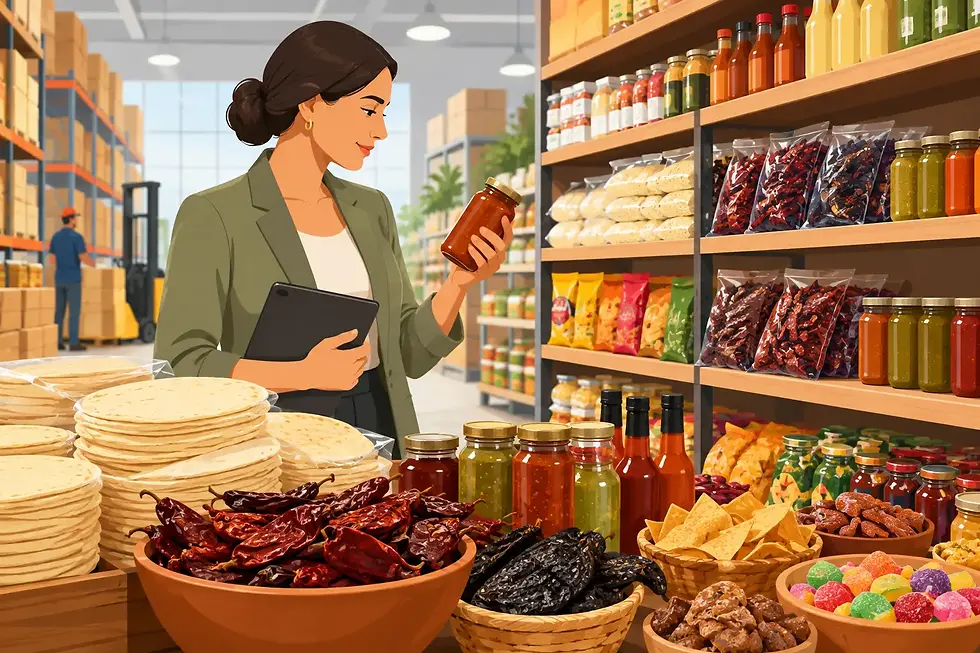
Latin food demand is broad. A neighborhood restaurant may need dependable access to tortillas, masa harina, dried chiles, sauces, and seasonings. A supermarket may require a wider mix that includes sweets, candy, cookies, beverages, grains, condiments, soups, and household essentials. Specialty grocers often need both core pantry products and new items that help their assortment stay relevant.
A capable distributor should make that variety manageable. The goal is not simply a long product list. It is a catalog built around the way customers shop, cook, and replenish their pantries. That requires familiarity with Latin American and Mexican food traditions, as well as an understanding of the purchasing realities facing Ontario food businesses.
Authenticity matters because buyers are serving customers who recognize quality. Package format, ingredient profile, flavor consistency, and trusted regional product categories can all affect repeat purchases. When a distributor has established relationships with suppliers in South America and the United States, it can offer stronger access to the products commercial buyers actively seek.
Evaluate Product Range by Your Business Model
Every operation needs a different balance of depth and breadth. Before opening or expanding an account, consider which categories drive your most frequent orders and which categories create opportunities for larger basket sizes.
A restaurant or foodservice operator may prioritize dependable back-of-house staples. For these buyers, availability of tortillas, corn flour, dried chiles, sauces, fish products, seasonings, and grains can matter more than a large candy selection. A retail buyer, by comparison, needs an assortment that supports multiple occasions: everyday cooking, pantry restocking, snacks, beverages, and culturally familiar household purchases.
A useful distributor helps buyers source across these needs without creating unnecessary complexity. For example, carrying foods alongside natural products, cleaning products, and health care items may help a grocery retailer consolidate routine purchasing. It may not be the right fit for every restaurant, but it can be valuable for stores that want a more complete Latin grocery assortment.
Look Beyond Individual Items
The best buying decisions are made at the category level. Instead of asking only whether a distributor carries one specific product, assess whether it can support the surrounding purchase. A shopper buying corn flour may also be looking for chiles, sauces, seasonings, and beans. A customer choosing a familiar beverage may also add cookies, candy, or savory snacks.
That category perspective improves merchandising and reduces the risk of empty shelves in complementary products. It also gives supermarket and specialty grocery buyers a clearer way to plan promotions, seasonal displays, and recurring purchase orders.
Delivery Reliability Is Part of Product Quality
A product is only useful when it arrives when your business needs it. For GTA operators, delivery planning should be a major part of evaluating a Latin food distributor in Ontario. Scheduled delivery routes can help restaurants maintain service levels and help retailers avoid stock gaps on high-turn items.
Ask practical questions early. How often are deliveries scheduled in your area? What is the order process? How are out-of-stock items communicated? Who can respond when an order needs adjustment? Fast, direct answers are often more valuable than broad promises.
Daily scheduled routes across Toronto, Mississauga, Brampton, Vaughan, Etobicoke, Scarborough, North York, Oakville, Richmond Hill, Markham, and nearby GTA communities can make replenishment easier to manage. For businesses outside the GTA, a distributor's ability to serve the broader Ontario market should be confirmed based on the delivery schedule and order requirements for that location.
There is a trade-off to consider. Ordering larger quantities less often may reduce the effort involved in purchasing, but it requires more storage and ties up working capital. Smaller, more frequent deliveries can improve freshness and flexibility, yet they depend on reliable routing. The right approach depends on your sales volume, storage capacity, and how quickly key categories move.
Wholesale Value Requires More Than a Low Unit Cost
Commercial buyers naturally compare pricing, but unit cost should not stand alone. A lower-priced product that arrives inconsistently, does not meet customer expectations, or requires replacement sourcing can cost more over time. Wholesale value includes product quality, order accuracy, product availability, delivery dependability, and the time your team spends resolving issues.
This is especially relevant in ethnic food categories, where substitutions are not always acceptable. If a customer expects a particular style of tortilla, chile, condiment, or sweet, replacing it with a generic alternative can weaken trust in the store or restaurant. Reliable access to authentic products helps protect the customer experience that your business has worked to build.
Buyers should also consider order consolidation. Working with a distributor that covers multiple Latin grocery categories can simplify receiving, invoice review, and inventory planning. Consolidation is not automatically the best choice if a supplier lacks depth in your most important lines. But when the product range and service level match your needs, it can make purchasing more efficient.
Choose a Partner That Communicates Clearly
Distribution is a service business. Product selection matters, but communication often determines whether a supplier becomes a long-term partner. A responsive team can help buyers confirm availability, understand pack formats, identify suitable alternatives when needed, and plan orders around delivery schedules.
Clear communication is particularly valuable when demand changes. A restaurant may add a menu item and need a faster replenishment cycle. A grocery retailer may see increased movement during a holiday period or after expanding a Latin foods aisle. In both cases, the distributor should be easy to reach and prepared to provide practical information, not vague answers.
Terragusto Products Inc. supports commercial buyers with wholesale Latin food sourcing from Markham, scheduled GTA delivery routes, and pickup options for customers who need local order flexibility. That combination can be useful for businesses that want access to a broad assortment without losing the convenience of a local distribution partner.
Questions Worth Asking Before You Order
A productive supplier conversation should cover more than a catalog. Confirm the product categories most relevant to your business, the typical delivery schedule for your area, minimum order expectations, ordering procedures, and how the team handles substitutions or unavailable items. If you are a retailer, ask about pack sizes and products that work well for shelf assortment. If you operate foodservice, focus on consistency, availability, and the order rhythm that supports your kitchen.
It is also wise to begin with the categories that matter most to your customers. Build confidence in service and product fit before expanding into less familiar lines. This approach keeps inventory disciplined while giving your business room to test demand.
Build Your Assortment Around Customer Trust
Authentic Latin food products create value when they are available consistently and merchandised with intention. Restaurants rely on them to maintain familiar flavor profiles. Supermarkets and specialty retailers rely on them to give customers a reason to return. The distributor behind those products needs to understand both sides of that equation: cultural relevance and commercial execution.
A dependable B2B Latin food distributor in Ontario should help make purchasing easier, not add uncertainty to your operation. Start with your highest-priority categories, confirm delivery and communication standards, and choose a partner that treats reliable supply as seriously as you do. When shelves and kitchens stay ready, your customers notice.


Comments