


Choosing a Latin Grocery Delivery Service

Updated: Oct 2
When a key Latin ingredient is missing, the problem is rarely just one item. A restaurant changes a menu feature, a grocery shelf sits half-stocked, or a customer leaves without the brand they came in for. That is why choosing the right latin grocery delivery service matters. For foodservice operators, retailers, and households that buy with purpose, delivery is not only about convenience. It is about product continuity, authenticity, and trust.
What a latin grocery delivery service should actually solve
A good supplier should solve more than transportation. The real job is making authentic Latin products available in a dependable, organized way so buyers can plan with confidence. That includes consistent inventory, clear communication, and a product mix that reflects how Latin food is actually bought and used.
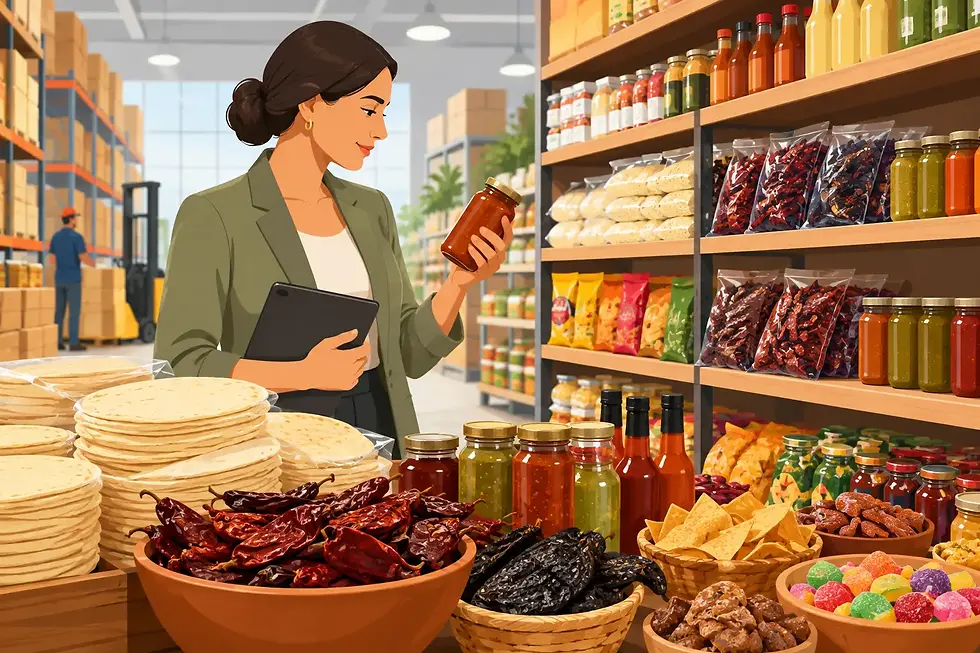
For a restaurant owner, that may mean tortillas, masa harina, dried chiles, sauces, seasonings, grains, and beverages arriving on a schedule that supports service. For a supermarket buyer or independent retailer, it may mean balancing staple products with high-turn specialty items and seasonal demand. For home customers, it may simply mean easier access to familiar brands and pantry essentials that are not reliably stocked in mainstream stores.
The strongest providers understand these differences. They do not treat every order the same way because commercial buyers and household customers do not buy the same way.
Product range matters more than convenience alone
Many buyers start with speed. That makes sense, but fast delivery does not help much if the catalog is too narrow or inconsistent. A latin grocery delivery service should offer enough depth to support real purchasing patterns, not just a handful of popular items.
That usually means a broad selection across core categories such as tortillas, corn flour, dried chiles, condiments, sauces, sweets, candy, beverages, cookies, grains, soups, fish, natural products, cleaning products, and health care items. The value of this range is practical. Buyers can consolidate more of their purchasing with one supplier instead of splitting orders across multiple sources.
There is also a quality issue here. Latin food categories are not interchangeable. A buyer looking for authentic regional ingredients is usually not looking for a generic substitute. Product range is part of authenticity because it allows customers to buy what they actually need, not what happens to be available.
Reliability is the difference between a supplier and a partner
A latin grocery delivery service becomes valuable when it is predictable. Reliability shows up in small operational details. Orders are confirmed clearly. Delivery windows are realistic. Product quality is consistent from case to case. Communication is fast when stock changes or substitutions become necessary.
This is especially important for businesses managing demand week after week. If a retailer builds shelf space around Latin categories, gaps hurt both revenue and customer trust. If a foodservice operator depends on specific products for prep and service, inconsistency creates avoidable cost and stress.
There is always some reality to inventory management. Imports can fluctuate. Seasonal demand can shift. Certain categories move faster than expected. A reliable supplier does not pretend these issues never happen. Instead, they manage them professionally, communicate early, and help buyers adjust without scrambling.
Why sourcing relationships matter
Not every distributor offers the same access to product. This is where sourcing relationships make a measurable difference. Established connections with suppliers in Latin America and the United States generally lead to a stronger assortment, steadier replenishment, and better visibility into what is available.
For the buyer, this matters because sourcing affects both consistency and authenticity. A distributor with real category knowledge is more likely to understand which products matter to specific customer bases and which items are staples versus occasional add-ons. That kind of knowledge helps retailers stock more effectively and helps restaurants maintain menu integrity.
There is also a commercial advantage. Strong sourcing relationships often support more stable purchasing over time. Exact pricing will always depend on product mix, order volume, and market conditions, but buyers still benefit when a distributor has an established supply network rather than a patchwork approach.
Delivery routes and local coverage are not minor details
For Ontario buyers, especially in high-density commercial areas, route structure matters. A latin grocery delivery service with scheduled delivery across major GTA markets can support better inventory planning than a provider with inconsistent coverage. It is easier to forecast orders when delivery frequency is clear and communication is direct.
This matters for businesses in Toronto, Mississauga, Brampton, Vaughan, Etobicoke, Scarborough, North York, Oakville, Richmond Hill, and Markham, where order timing can affect labor, storage, and shelf restocking. A supplier serving these routes regularly is not just moving boxes. It is helping buyers reduce friction in day-to-day operations.
For some customers, pickup also has value. If a buyer needs flexibility, a local pickup option can fill an immediate gap without waiting for the next route. That is one reason Terragusto Products Inc serves both delivery customers and pickup orders from its Markham location. The model works because it supports different buying needs without overcomplicating the process.
How commercial buyers should evaluate a latin grocery delivery service
The right choice depends on what kind of buyer you are. Restaurants usually need consistent staples, responsive communication, and delivery timing that fits prep cycles. Retailers need category breadth, dependable stock, and products that turn well across both core and specialty segments. Specialty grocers often need deeper cultural knowledge because their customers notice when an item is authentic and when it is only adjacent.
A practical evaluation starts with a few direct questions. Does the supplier understand the categories you need most? Can they support recurring orders without frequent gaps? Is communication fast when inventory shifts? Do they serve your area on a schedule that works for your business? Can you place orders efficiently without chasing updates?
It also helps to look at whether the supplier is built for volume. A business that serves restaurants, supermarkets, and retailers usually operates with a different level of discipline than a casual reseller. That does not automatically make one option better for every customer, but it often means stronger systems, broader assortment, and a more professional delivery process.
Home customers need reliability too
While commercial service is a major part of this market, home customers also benefit from a dependable latin grocery delivery service. The need is different, but the expectation is similar. People want familiar ingredients, recognizable brands, and the confidence that the products reflect real Latin pantry needs.
For households, the biggest frustration is often inconsistency. Mainstream stores may carry a few items, then rotate them out or replace them with limited alternatives. A specialized supplier can offer better continuity and a more complete basket, especially for pantry staples, sweets, beverages, condiments, and household essentials.
The trade-off is that not every wholesale-oriented distributor is structured exactly like a consumer retail platform. That is not necessarily a drawback. In many cases, it means better category depth and stronger product knowledge, even if the buying process is more straightforward and less promotional.
The best service is built on category knowledge
Latin grocery is not one single category. It includes products from multiple countries, cooking traditions, and shopping habits. A supplier that understands this will usually be better at helping customers source what actually fits their business or household demand.
That knowledge shows up in how products are grouped, how orders are handled, and how recommendations are made. It is one thing to carry Latin products. It is another to understand which items are everyday essentials, which ones support specific customer communities, and which categories create repeat purchasing.
For buyers, that difference saves time. Instead of educating the supplier on every order, they can work with a company that already understands the category and can respond accordingly.
What to look for before you place an order
Before choosing a provider, focus on the fundamentals. Look for breadth of inventory, dependable communication, scheduled delivery, and a sourcing network that supports authentic products. Make sure the service model fits your buying pattern, whether that means recurring commercial orders, mixed-category replenishment, or occasional pickup.
It also helps to think beyond the first delivery. The better question is whether this supplier will still work for you after the third, tenth, or fiftieth order. That is where service quality becomes visible. Consistency, responsiveness, and product knowledge tend to matter more over time than a one-time convenience claim.
If you buy Latin products regularly, the right distributor should make your operation simpler, not more complicated. The best latin grocery delivery service is the one that keeps authentic products moving, supports your schedule, and gives you confidence every time you place the next order.
A dependable supply chain is easy to overlook when everything is in stock, but that is exactly when its value is highest.


Comments