

How to Choose a Bulk Latin Groceries Supplier

Updated: 2 days ago
A popular Latin snack selling out on a Friday or a restaurant running short on masa harina before the weekend can quickly become an inventory problem. The right bulk latin groceries supplier helps prevent those gaps by combining authentic products with dependable local service, practical order flexibility, and clear communication. For supermarkets, independent grocers, restaurants, and foodservice operators, the goal is not simply to buy more products. It is to stock the products customers recognize, request, and return for.
What a Bulk Latin Groceries Supplier Should Provide
Latin food purchasing has different demands from general grocery purchasing. A product may be a daily staple for one customer group, a key menu ingredient for a restaurant, or a seasonal high-volume item for a retailer. A supplier needs to understand that a tortilla, a dried chile, a familiar soda, or a packaged sweet can carry both commercial value and cultural importance.
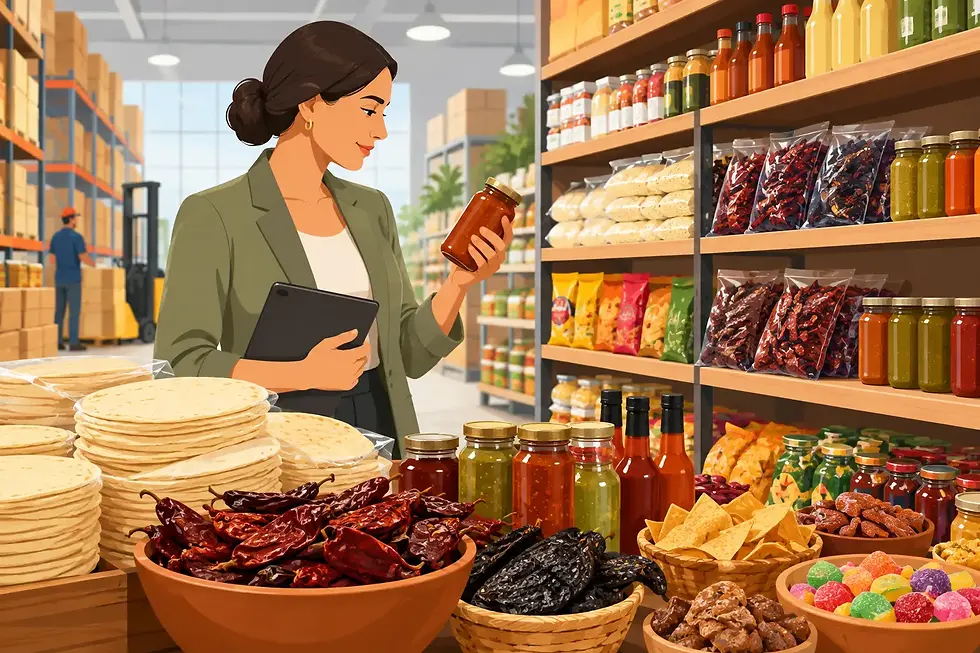
A dependable supplier should offer more than a narrow assortment of popular items. Buyers need access to core categories that support complete shopping baskets and consistent menu planning: tortillas and corn flour, chiles and sauces, seasonings and condiments, grains, beverages, snacks, cookies, candy, soups, fish, natural products, and household essentials. Breadth matters because it reduces the time spent coordinating multiple vendors and helps retailers maintain a more credible Latin assortment.
Authenticity matters just as much as selection. Products should come from established Latin American, Mexican, South American, and U.S. supplier relationships, with recognizable brands and quality standards that buyers can trust. A supplier that understands the category can help customers distinguish between everyday staples, specialty items, impulse purchases, and products with strong repeat demand.
Start With Your Actual Buying Needs
The best supplier for a full-service supermarket may not be the best fit for a small taqueria, café, or specialty retailer. Before comparing distributors, define what you need to keep in stock and how frequently those needs change.
Restaurants often prioritize dependable access to foundational ingredients. Tortillas, corn flour, dried chiles, sauces, seasonings, and condiments may directly affect menu consistency. When those items are unavailable or substituted with unfamiliar alternatives, the operational impact can be immediate. Foodservice buyers should look for suppliers that can support recurring needs while responding quickly when an order must be adjusted.
Grocery retailers usually need a broader assortment. In addition to pantry items, they may require snacks and chips, sweets, candy, baked goods, beverages, cookies, cleaning products, and health care items. These categories serve different purchasing behaviors. Pantry staples drive planned trips, while snacks, drinks, and candy can add repeat purchases and basket value.
Smaller operators should pay close attention to order flexibility. Large order requirements can force a business to buy more than it can sell or use before the product’s best-before date. No-minimum ordering allows buyers to replenish according to actual demand, test a new category, or fill a specific gap without tying up unnecessary cash in inventory.
Evaluate the Product Mix, Not Just the Product Count
A long catalog can be useful, but a relevant catalog is more valuable. Ask whether the supplier carries products that match the customers you serve and the kind of Latin assortment you want to build.
For example, Mexican grocery demand may center on tortillas, masa harina, sauces, dried chiles, and well-known snack brands. Colombian demand may call for a different group of pantry goods, sweets, beverages, and familiar packaged products. A supplier with knowledge across Latin categories can help buyers avoid a generic assortment that looks broad but misses the products their customers are actively seeking.
Brand recognition also has a practical role. Familiar brands such as Takis, Bimbo, Gansito, Kuii, and Diana can help shoppers make fast decisions because they already know what they are buying. For retailers, recognizable products can support confidence at the shelf. For restaurants and foodservice businesses, established brands can bring more consistency to ingredients and back-of-house purchasing.
That does not mean every order should focus only on high-recognition products. Less familiar items can be worthwhile when they fit a clear customer need. The key is balancing proven sellers with thoughtful assortment expansion. Start with staples, monitor movement, and add specialty products where demand supports them.
Look Closely at Supply Consistency and Communication
Price is an essential purchasing factor, but it should not be the only one. A low-cost item is less useful if stock availability is unpredictable, communication is slow, or substitutions arrive without enough clarity for the buyer to make a good decision.
When evaluating a bulk Latin groceries supplier, ask how orders are handled, how inventory questions are answered, and whether the supplier can help identify suitable alternatives when a particular item is unavailable. Clear communication gives buyers time to adapt their ordering and protect their own customer experience.
Reliable vendor relationships are also important. Established sourcing relationships can support a more stable range of authentic products and help a distributor maintain category depth over time. This is especially relevant for businesses that need regular access to products with a specific flavor profile, format, or cultural familiarity.
It also helps to keep your own purchasing records. Review which products move quickly, which ones create frequent out-of-stocks, and which categories have slowed down. A supplier can provide the inventory, but the buyer still needs a replenishment plan based on real sales patterns, menu usage, and storage capacity.
Delivery and Pickup Should Fit Your Operation
A strong product selection loses value if receiving an order creates unnecessary disruption. Delivery schedules, route coverage, and pickup options should fit the way your business operates.
For buyers throughout the Greater Toronto Area, Kitchener-Waterloo, and London, scheduled weekday delivery can make regular replenishment easier to plan. Businesses in Toronto, Mississauga, Brampton, Vaughan, Etobicoke, Scarborough, North York, Oakville, Richmond Hill, and Markham may have different receiving windows and storage limitations, so predictable route-based service is especially useful.
Pickup can be equally valuable when a buyer needs to manage inventory more directly or wants to add products between regular deliveries. A Markham pickup location near Highways 404 and 401 can be convenient for businesses and individual buyers traveling through the area. The right option depends on your order size, staffing, storage, and how quickly products need to be placed on shelves or into kitchen inventory.
Build a Supplier Relationship That Supports Growth
The strongest wholesale relationships become more useful over time. As a restaurant adds menu items, a supermarket expands its international aisle, or a specialty retailer responds to new demand, its buying needs change. A responsive supplier can help the business adjust without making procurement more complicated.
That relationship works best when buyers communicate clearly about priorities. Let the supplier know which items are core, which products are seasonal, and where you are testing demand. Share packaging preferences when relevant, especially if shelf space or kitchen storage is limited. The more specific the purchasing conversation, the easier it is to build an assortment that serves the business rather than merely filling a catalog.
There is no single right order size or category mix. A busy supermarket may need a broad weekly replenishment, while a smaller restaurant may benefit from targeted purchases of core ingredients. What matters is having access to authentic products, competitive pricing, flexible order quantities, and a service model that respects the realities of your operation.
Terragusto Products Inc. helps restaurants, grocers, and retailers source authentic Latin products with no minimum order and scheduled delivery across the GTA, Kitchener-Waterloo, and London. Review the product catalog or contact the team at 905-477-4630 or info@terragusto.ca to discuss your next order. A well-planned Latin assortment starts with products your customers trust and a supplier prepared to help you keep them available.


Comments