


Authentic Latin Products for Supermarkets

Updated: Oct 2
A supermarket can add a Latin set, put up a few flags, and still miss the mark if the products are not the ones shoppers actually trust. Authentic latin products for supermarkets are not just about adding variety. They shape repeat traffic, basket size, and customer confidence in the store’s ethnic grocery program.
For buyers, the challenge is practical. The right assortment needs to serve established Latin households looking for familiar brands and ingredients, while also appealing to shoppers who are trying these products for the first time. That means authenticity matters, but so do shelf stability, delivery consistency, pricing, and the ability to replenish fast when demand moves.
What supermarkets should expect from authentic latin products for supermarkets
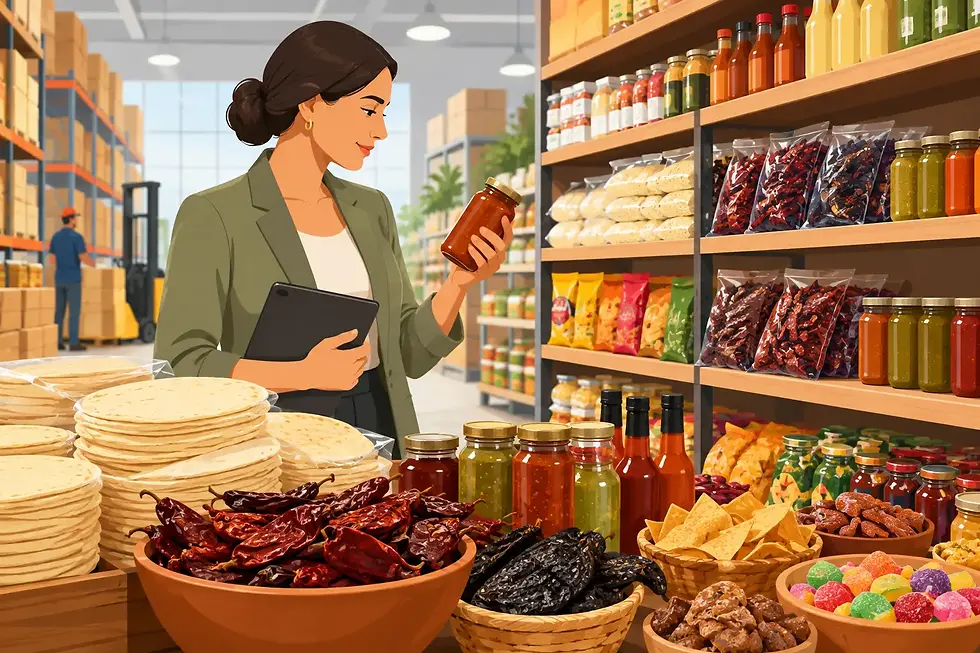
Authenticity starts with product origin, but it does not end there. In supermarket retail, it also means recognizable brands, correct flavor profiles, proper pack formats, and product categories that reflect real cooking habits. A shelf with tortillas but no salsa, dried chiles, corn flour, beans, and seasonings is incomplete. A freezer with one Latin item and no supporting pantry products will rarely perform the way buyers hope.
A strong Latin assortment should feel connected. Mexican staples often lead because they have broad appeal and consistent movement, but shoppers also expect a wider range across beverages, candy, grains, condiments, cookies, soups, and household products. The closer the assortment gets to how customers actually shop, the more credible the section becomes.
There is also a difference between products that look authentic and products that are trusted by the community. Packaging can suggest heritage, but repeat sales usually come from known labels and dependable quality. Buyers who understand that distinction tend to build stronger sets over time.
The categories that drive movement
In most supermarkets, tortillas and corn-based staples are the entry point. They are versatile, high-frequency items, and they support both everyday cooking and impulse purchases. Corn flour, tostadas, tortilla chips, and packaged taco components often perform well when they are merchandised as part of a complete meal solution rather than as isolated products.
Sauces and dried chiles are another important layer. These products signal authenticity quickly because customers often know exactly what they need by name, heat level, or use case. If the assortment is too narrow, the store loses credibility with experienced shoppers. If it is too broad without a clear plan, slower sellers can tie up shelf space. The balance depends on store format, neighborhood demand, and how much education the retailer is willing to provide.
Seasonings, canned goods, grains, and soups help round out the basket. They may not always be the most visible items, but they support regular household cooking and create repeat visits. Candy and cookies serve a different purpose. They are often impulse-friendly, family-oriented, and useful for increasing trial among non-Latin shoppers who may be less familiar with core pantry ingredients.
Beverages and natural products can add meaningful value too, especially in stores where customers expect cultural variety beyond the dry grocery aisle. In some markets, cleaning and personal care items with strong brand recognition also matter more than buyers initially assume. For many households, authenticity extends beyond food.
Why sourcing matters as much as product selection
A supermarket buyer can choose the right products and still struggle if sourcing is inconsistent. That is one of the biggest issues in ethnic grocery categories. Out-of-stocks break trust fast, especially when shoppers rely on specific brands for weekly cooking.
Reliable sourcing means more than getting access to imported or specialty goods. It means working with a distributor that has established vendor relationships, understands category demand, and can keep replenishment predictable. Scheduled delivery routes, responsive communication, and stable inventory planning make a noticeable difference at store level.
This is where many retailers see the real value of a focused Latin food distributor. Instead of piecing together orders from multiple general suppliers, buyers can build a more coherent assortment with fewer service gaps. For Ontario retailers and foodservice buyers, that practical advantage often matters just as much as product breadth.
Authenticity and margin need to work together
There is a common mistake in ethnic grocery buying. Some stores treat Latin products as a niche add-on and accept weak margins or inconsistent turns because the section is seen as secondary. Others overcorrect and chase margin at the expense of authenticity, bringing in substitutes that do not build loyalty.
The better approach is to treat the category like any other serious department. Core items should be competitively priced and easy to find. Higher-margin products can sit around them in complementary categories such as snacks, sweets, specialty sauces, and beverages. When the assortment is built with intention, authenticity and profitability support each other.
Pack size matters here. Larger formats may suit restaurants and high-volume family shoppers, while smaller sizes can help trial and reduce shelf risk in mainstream supermarket formats. It depends on the customer base. Stores in dense Latin neighborhoods can carry deeper inventory in staple categories. Stores with mixed demographics may do better with a tighter range and stronger cross-merchandising.
How supermarkets can build a Latin set that actually sells
The first step is to think in meals, not just products. Shoppers do not buy corn flour in isolation. They buy ingredients for tortillas, tamales, sauces, soups, rice dishes, snacks, and family meals. A supermarket that groups products around real cooking behavior usually sees better results than one that spreads items across unrelated aisles with no context.
The second step is to identify non-negotiable staples. These are the products customers expect every time they visit. If those items are missing, they may not trust the rest of the set. Once those essentials are stable, buyers can test additional products in snacks, beverages, sweets, or regional specialties.
The third step is to watch repeat sales more closely than first-week trial. A novelty item may get attention once, but staple movement tells you whether the assortment is anchored properly. Reliable reorder patterns are often a better signal than promotional spikes.
Clear labeling and organized shelf flow also help. A shopper looking for mole, dried peppers, corn flour, or specific seasonings should not have to search across multiple sections. Good category organization respects the customer’s time and improves basket building.
What buyers should look for in a distribution partner
A dependable supplier should bring more than a product list. Buyers need a partner that understands which items are foundational, which brands carry trust, and how to support both broad supermarket retail and more specialized Latin demand.
That includes competitive pricing, but price alone is not enough. Fast communication, accurate fulfillment, and daily or scheduled delivery support are often what keep a category healthy. If a top-selling tortilla line or sauce is out for too long, customers notice immediately.
A distributor with a broad catalog can also simplify operations. When supermarkets can source tortillas, sauces, dried chiles, grains, candies, beverages, cookies, soups, natural products, and household items through one channel, ordering becomes more efficient. That reduces administrative friction and helps buyers maintain a more complete set.
Terragusto Products Inc serves that role for many retailers by combining authentic Latin sourcing with a practical wholesale model built around dependable replenishment and broad category coverage.
It depends on your store format
Not every supermarket should stock the same Latin assortment. A large-format store with strong multicultural traffic can support a wider SKU mix and more regional depth. A smaller supermarket may need to focus on proven staples and build gradually. Neither approach is wrong.
What matters is whether the assortment is credible for the customers walking in the door. A small but well-chosen set of authentic latin products for supermarkets will usually outperform a larger, inconsistent mix that lacks the key items people came to buy.
This is also why local market knowledge matters. Buying for a suburban family-oriented store is different from buying for an urban store serving a concentrated Latin community. The best assortment reflects who shops there, how often they cook these foods at home, and how far they are willing to travel for a trusted product.
Supermarkets that take Latin grocery seriously tend to see the category grow steadily rather than sporadically. Customers respond to consistency. If the staples are there, the quality is right, and replenishment is dependable, the section becomes part of the weekly shop instead of a one-time stop. That is where authentic assortment turns into long-term retail value.
A good Latin program does not need to start oversized. It needs to start right, with trusted products, reliable supply, and a category plan built around real demand.


Comments