


Bulk Mexican Pantry Staples That Sell

Updated: Oct 2
When a customer walks in looking for masa harina, dried chiles, mole paste, or hot sauce they grew up with, a substitute rarely works. That is why bulk Mexican pantry staples matter for both retail shelves and foodservice kitchens. They are not just commodity items. They are repeat-purchase products that drive menu consistency, customer trust, and better inventory value when sourced correctly.
For supermarkets, specialty grocers, restaurants, and caterers, the buying question is usually not whether to carry these products. It is which staples deserve space, what pack sizes make sense, and how to keep authentic inventory moving without tying up cash in slow stock. The best results come from treating Mexican pantry items as a core category with clear demand patterns, not as an occasional ethnic add-on.
Why bulk Mexican pantry staples deserve a real buying strategy
The strongest Mexican pantry categories do two jobs at once. They support everyday cooking, and they give customers confidence that your business understands authentic Latin food. A bag of corn flour, a case of canned peppers, or a dependable line of salsas can influence where people shop and where chefs place their next order.
Buying in bulk also changes the economics. Unit costs usually improve, replenishment becomes more predictable, and high-turn items are less vulnerable to short-term supply gaps. That said, bulk only works when the product mix matches actual demand. A busy taqueria can move through large packs of tortillas and dried chiles quickly. A small neighborhood market may need a broader assortment in moderate case counts so variety does not turn into dead inventory.
For Ontario buyers serving Latin communities and mainstream consumers alike, authenticity is part of the value proposition. Shoppers notice brand familiarity, flavor consistency, and whether a product performs the way it should in real cooking. Restaurant operators notice the same things, but with an added layer of food cost control and prep efficiency.
The core categories that move first
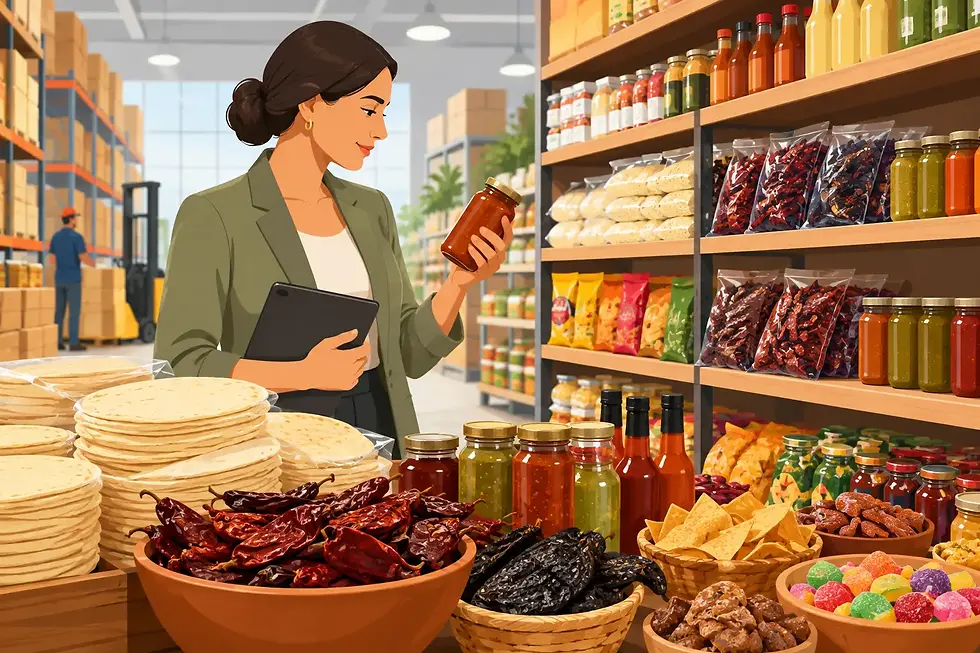
Most successful orders start with the pantry basics that have broad use across households and commercial kitchens. Corn flour and tortillas usually sit near the top because they support frequent, practical use. Tortillas serve restaurants across multiple dayparts, while masa harina supports tortillas, tamales, sopes, pupusas, and other menu staples. If your buyers serve high-volume kitchens, these products often justify larger pack formats and frequent delivery schedules.
Dried chiles are another anchor category. Guajillo, ancho, pasilla, arbol, and chipotle each serve different flavor profiles, from mild fruitiness to deeper heat and smoke. These are not interchangeable in serious cooking, which makes assortment important. A narrow selection may cover basic demand, but a more complete range helps restaurants and retailers serve customers looking for specific regional flavors.
Canned goods and preserved items also earn their space because they balance authenticity with shelf stability. Chipotle peppers in adobo, tomatillos, jalapenos, hominy, beans, and nopales support both home cooking and commercial prep. They reduce labor, standardize output, and give buyers a more forgiving inventory window than fresh alternatives.
Sauces, salsas, and mole products round out the category with strong repeat potential. These products bring recognizable flavor and often carry strong brand loyalty. For retailers, they are easy add-ons that increase basket size. For restaurants, they can save prep time without sacrificing the flavor profile customers expect. The trade-off is that some sauce lines move very fast while others are more niche, so SKU discipline matters.
Bulk Mexican pantry staples for restaurants vs retail stores
The same product category can behave very differently depending on the customer. Restaurants generally value consistency, back-of-house efficiency, and case pricing. They are often better served by larger formats, fewer brands, and a tighter SKU list built around menu usage. A kitchen that produces tacos, enchiladas, pozole, and salsas every day needs dependable replenishment more than endless variation.
Retail stores usually need a broader shelf story. Shoppers compare brands, look for familiar packaging, and often buy across several pantry categories at once. In that setting, variety can be a strength, but only if it is managed carefully. Too many near-duplicate items can slow turns and create uneven sell-through.
This is where pack size planning matters. A foodservice operator may prefer larger bags of dried beans, rice, corn flour, and seasoning blends. A grocery retailer may need consumer-friendly formats alongside a few family-size options for high-demand neighborhoods. There is no single right answer. The right order reflects who your customers are, how quickly products move, and how often you can replenish.
What to prioritize if you want fast turns
If the goal is steady movement, start with products tied to routine meals and widely recognized cooking patterns. Tortillas, corn flour, beans, rice, dried chiles, salsa, hot sauce, bouillon, seasoning mixes, and canned peppers tend to create a reliable base. These are practical staples, not novelty buys.
From there, it helps to build in adjacent products that support complete meal preparation. A customer buying tortillas may also need refried beans, pickled jalapenos, crema-style products, seasonings, or canned sauces. A restaurant ordering dried chiles may also need stock cubes, mole paste, tomatillos, and large-format condiments. The strongest pantry programs are built around these buying relationships.
Seasonality can also shape demand. Holidays and family gathering periods often increase movement on items used for tamales, pozole, menudo, desserts, and festive meals. Smart buyers increase depth on proven staples before these peaks rather than reacting after shelves are already thin.
How to buy smarter without overstocking
Bulk purchasing should improve control, not create storage problems. The first step is to separate true staples from specialty items. True staples deserve consistent depth because they support daily demand. Specialty products still matter, especially for credibility and differentiation, but they may need tighter quantities and closer review.
Shelf life is only part of the equation. You also need to look at rate of sale, storage conditions, and case configuration. A great price on a slow-moving SKU is not always a great buy. This is especially true with sauces, candies, cookies, and other packaged goods where variety is high and customer preferences are specific.
It also helps to work with a distributor that can support regular replenishment rather than forcing oversized buys. Scheduled delivery routes, responsive communication, and stable sourcing relationships give buyers more flexibility. That matters in categories where a missed item can affect an entire menu or leave a shelf with obvious gaps. For many Ontario buyers, this is where a distributor like Terragusto provides practical value - authentic assortment backed by wholesale pricing and dependable local delivery.
Quality and authenticity are not secondary issues
Mexican pantry products are highly familiar to the customers who buy them most often. They know how a tortilla should heat, how a chile should smell, and how a mole or salsa should perform in actual cooking. If quality slips, repeat business usually slips with it.
That is why sourcing matters as much as price. Established vendor relationships, recognizable brands, and consistent product handling all reduce risk. In foodservice, poor quality shows up in labor waste, inconsistent flavor, and menu complaints. In retail, it shows up in slower repurchase and weaker trust in the category as a whole.
Authenticity also affects how broadly the category can grow. Mainstream shoppers often enter through trusted packaged products before trying deeper regional ingredients. If your pantry section is built around credible staples, it becomes easier to introduce adjacent items over time.
Building a dependable pantry program
A strong pantry program is not only about what you stock. It is about how reliably you can restock it. Buyers need confidence that high-volume items will be available, that pricing will stay competitive, and that communication will be fast when needs change.
This is especially important for restaurant operators managing food cost and prep schedules. It is just as important for grocery buyers who cannot afford empty spots in a category known for loyalty and repeat purchase. Broad catalog access also helps. When one supplier can cover tortillas, corn flour, sauces, dried chiles, seasonings, sweets, grains, and other grocery essentials, ordering becomes simpler and replenishment becomes more efficient.
The best approach is practical. Start with the staples that already have proven demand. Match pack sizes to your customer base. Add range where authenticity matters most. Then support the category with reliable, scheduled supply. Bulk buying works best when it protects both margin and trust.
For buyers who want Mexican pantry products to perform consistently, the goal is straightforward: stock what people actually cook with, buy in quantities that fit your turnover, and work with supply partners who understand that authenticity and reliability belong in the same order.


Comments