

Wholesale Latin Food Toronto for Growing Menus

Updated: 2 days ago
A missing case of tortillas, a popular snack that sells out before the weekend, or an inconsistent supply of dried chiles can affect far more than one shelf. For restaurants and retailers, sourcing wholesale Latin food Toronto buyers can depend on means balancing authentic products with practical inventory control. The right distributor helps you keep familiar brands and essential ingredients available without forcing your business into oversized orders.
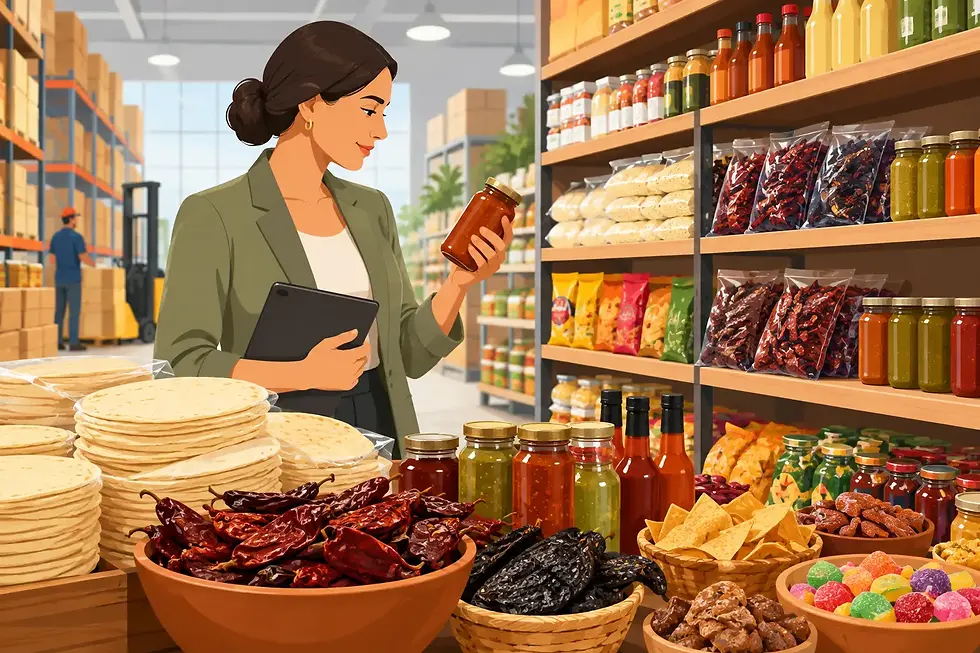
Latin food demand is broad across the Greater Toronto Area. A supermarket may need snacks, candy, beverages, and pantry staples that move consistently. A restaurant may need tortillas, masa harina, sauces, seasonings, and chiles that support the flavors customers expect. Specialty grocery retailers often need both: recognizable products for established Latin households and approachable choices for customers trying Latin American foods for the first time.
What Toronto Buyers Need From a Latin Food Supplier
Authenticity is the starting point, but it is not the only buying consideration. A product must also arrive in good condition, fit the buyer's assortment, and be available often enough to support reliable replenishment. When suppliers have weak sourcing relationships or a limited range, purchasers can spend too much time placing orders across multiple vendors.
A strong wholesale partner brings together products that make sense on the same order. That might mean corn flour alongside tortillas and condiments, or packaged snacks alongside sweets and beverages. Consolidating categories reduces purchasing friction and makes it easier for buyers to respond to changing demand without compromising the character of their selection.
Order flexibility matters just as much. Large minimums can leave a small restaurant, new retailer, or seasonal operator carrying more inventory than it can sell quickly. No minimum order gives buyers room to test a new item, replenish a fast-selling line, or make a smaller adjustment to an established order. The best order size is not always the biggest one. It is the size that fits available storage, turnover, and customer demand.
Build an Assortment Around Real Buying Occasions
Latin American food is not one category, and treating it as one can leave important gaps in a store or foodservice program. Product selection should reflect how customers shop and how kitchens operate.
Pantry Staples That Support Everyday Demand
Tortillas, corn flour, grains, soups, sauces, dried chiles, seasonings, fish products, and condiments form the practical base of many Latin food assortments. These are not novelty purchases. They are repeat items for households and operational essentials for foodservice businesses.
For restaurant buyers, consistency is especially valuable. A familiar tortilla texture or a dependable seasoning profile supports menu execution and purchasing predictability. For grocers, core pantry products create a reason for customers to return, rather than visit only for occasional snack or candy purchases.
Snacks, Sweets, and Beverages That Drive Discovery
Chips, snacks, cookies, sweets, candy, and beverages add energy to a Latin food section. They can support impulse purchases, expand the basket, and introduce new shoppers to brands they may not yet know. Well-known lines such as Takis, Bimbo, Gansito, Kuii, and Diana can bring recognition to an assortment while complementing less familiar items.
These categories need active monitoring. A high-demand snack can move faster than a pantry staple, while seasonal buying patterns can affect sweets and beverages. Buyers should review what actually sells by package size, flavor, and customer segment rather than assuming every product will perform equally in every neighborhood.
Beyond Food: Convenient Complementary Categories
Some retailers benefit from adding natural products, cleaning products, and health care items that appeal to their existing shoppers. These categories can make a Latin-focused store more useful for routine household trips. They should be selected carefully, though. If shelf space is limited, core food products and top-selling convenience items should usually come first.
How to Choose Wholesale Latin Food in Toronto
Purchasing decisions are easier when buyers use a clear standard. Start with product authenticity and supplier relationships. Authentic products are not simply products with Spanish-language packaging. They should reflect the ingredients, brands, and regional preferences your customers recognize and request.
Next, assess category depth. A supplier that carries only a few snack lines may be useful for a narrow need, but a broader catalog can help a business build a more complete program. Look for a mix of Mexican and wider Latin American products, including pantry goods, packaged foods, beverages, and specialty categories. This creates more options when customer preferences shift or a menu expands.
Then consider operational fit. Scheduled delivery routes, responsive communication, and accessible pickup can reduce the risk of running short on important items. Toronto-area businesses may have different replenishment needs from operators in Kitchener-Waterloo or London, so it helps to work with a distributor that understands regional service planning rather than treating every account the same way.
Finally, consider flexibility before committing to a regular order pattern. Buyers often overestimate initial demand for a new product line. A no-minimum-order model lets a business begin with a considered assortment, observe sales, and adjust without tying up unnecessary cash in excess stock.
Wholesale Latin Food Toronto Buyers Can Plan Around
A dependable ordering process starts with knowing which products are foundational and which are exploratory. Foundational items are the products customers repeatedly ask for or that your kitchen uses frequently. Exploratory items are new flavors, seasonal selections, or products chosen to broaden the assortment. Both matter, but they should be purchased differently.
For foundational products, establish a regular review schedule based on sales pace and storage capacity. For exploratory products, bring in manageable quantities and watch customer response. If an item performs well, it can become part of the recurring order. If it does not, the no-minimum-order approach gives you room to change direction without creating a large overstock problem.
Communication with the distributor also improves purchasing decisions. Let the supplier know whether you are stocking a restaurant kitchen, independent grocery store, supermarket department, or specialty retail operation. The category mix for each is different. A foodservice operator may prioritize tortillas, sauces, chiles, and seasonings, while a retail buyer may need a broader mix of snacks, sweets, cookies, beverages, and household items.
Local Delivery and Pickup Make Replenishment Easier
A wholesale partner should be convenient after the first order, not just when the account is opened. Scheduled Monday through Friday delivery routes across Toronto, Mississauga, Brampton, Vaughan, Etobicoke, Scarborough, North York, Oakville, Richmond Hill, and Markham help businesses plan replenishment as part of normal operations. Service also extends to Kitchener-Waterloo and London, Ontario.
For buyers who prefer to collect products directly, pickup in Markham near Highways 404 and 401 is a practical option. This can be particularly useful for businesses making a targeted replenishment order or individual buyers seeking familiar Latin products without purchasing more than they need.
Delivery and pickup serve different needs, and neither is automatically better. Delivery supports regular operations and reduces time away from the business. Pickup provides added control when buyers want to coordinate their own collection. The useful option is the one that fits your purchasing schedule.
A Better Standard for Latin Food Purchasing
Reliable Latin food sourcing is about more than filling an order. It is about maintaining the products that customers recognize, creating room for new discoveries, and keeping inventory decisions proportionate to the business you run. When quality, variety, flexible order sizes, and local distribution work together, buyers can focus less on supply gaps and more on serving their customers well.
Restaurants, grocers, and retailers can order from Terragusto Products Inc. with no minimum order and access a broad Latin American and Mexican product catalog. Contact the team to discuss delivery across the GTA, Kitchener-Waterloo, and London, or arrange Markham pickup. Call 905-477-4630 or email info@terragusto.ca. A well-planned assortment starts with products your customers trust and an ordering process that respects how your business operates.


Comments