


Latin Food Wholesale Guide for Ontario Buyers

Updated: Oct 2
A missed tortilla shipment before the weekend rush does more than create a short-term gap. It disrupts menus, weakens customer trust, and forces buyers to substitute products that may not meet expectations. That is why a strong latin food wholesale guide starts with one basic principle: wholesale buying is not only about price. It is about supply consistency, authenticity, and how well your distributor supports the way you actually operate.
For restaurants, supermarkets, and specialty retailers, Latin food purchasing has its own demands. Core staples move quickly, brand preference matters, and customers notice the difference between a true regional product and a generic alternative. If you are buying for Ontario locations, you also need a partner that can replenish inventory on schedule and help you stay ahead of demand rather than react to shortages.
What a Latin food wholesale guide should help you solve
The best wholesale strategy solves two problems at the same time. First, it helps you source authentic products your customers recognize and trust. Second, it protects your day-to-day operation with reliable availability, fair pricing, and responsive service.
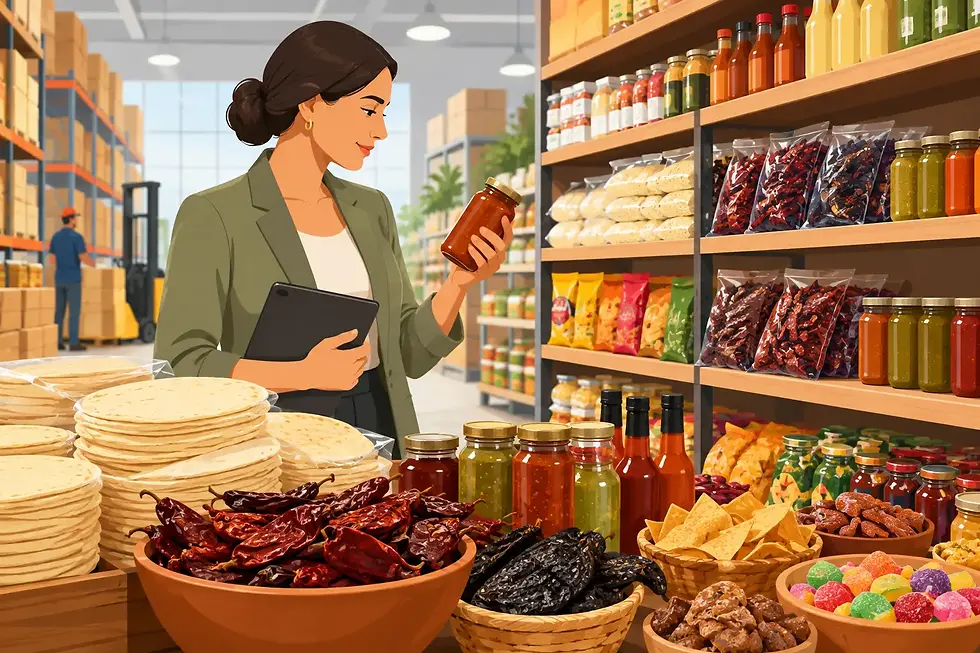
That balance matters because Latin food demand is rarely limited to one category. A restaurant may need tortillas, dried chiles, sauces, canned goods, spices, and beverages from one order. A supermarket buyer may need those same staples plus candy, cookies, grains, soups, cleaning products, and health care items that serve household demand. When purchasing is fragmented across too many suppliers, the result is more admin work, uneven stock levels, and less control over margins.
A practical wholesale plan reduces complexity. It gives buyers a dependable catalog, predictable ordering patterns, and fewer surprises when demand spikes.
Start with product authenticity, not just product availability
Any distributor can say they carry Latin products. That does not mean the assortment is right for your customers. Authenticity in wholesale is about brand mix, regional relevance, ingredient integrity, and consistency from case to case.
For example, a taqueria may not accept substitutes for tortilla formats, masa products, or specific salsa brands because taste and texture directly affect the plate. A grocery store serving Latin households may see repeat business tied to familiar packaged products, sweets, seasonings, and pantry staples that customers have bought for years. If those items disappear or are replaced too often, loyalty drops quickly.
This is where buyers need to look beyond a simple line sheet. Ask whether the distributor has established sourcing relationships with recognized brands across Mexico, South America, and the US market. Ask how often stock rotates, whether key staples are consistently available, and how the distributor handles substitutions. A broad catalog is useful, but only if it reflects real demand and not random product accumulation.
The core categories that matter most
In most Latin food wholesale programs, the highest-value categories are the ones that customers buy repeatedly and notice immediately when they are missing. Tortillas, corn flour, dried chiles, sauces, seasonings, canned goods, grains, and beverages usually form the foundation. For many buyers, sweets, snacks, cookies, and candy also play a major role because they drive impulse sales and help round out the basket.
Foodservice operators often focus on functional movement. They need steady supply, pack sizes that fit kitchen use, and pricing that supports menu margins. Retailers typically need a wider assortment because their shelves must serve both staple shopping and discovery. That can include fish, condiments, soups, natural products, and non-food essentials that encourage customers to complete more of their shopping in one place.
There is no perfect category mix for every business. A restaurant with a focused menu should avoid overbuying slow-moving retail items. A supermarket with strong Latin foot traffic should not underinvest in pantry depth just because a few top sellers move fastest. The right mix depends on customer behavior, shelf space, and reorder frequency.
How to evaluate a wholesale distributor
A good latin food wholesale guide should make distributor evaluation easier. Start with reliability. Ask how often deliveries run in your area, what lead times look like, and how back orders are managed. A lower case cost does not help much if deliveries are inconsistent or communication is slow when stock issues arise.
Next, review assortment depth. One supplier may carry a few headline products, while another can cover most of your needs across grocery, foodservice, beverages, snacks, and household categories. The second option often saves more money in practice because it reduces split orders, receiving time, and emergency purchasing.
Then look at pricing in context. Competitive pricing matters, but true buying value includes fill rate, order minimums, route consistency, and service response. If your team spends extra hours chasing availability or replacing missing products at retail prices, your actual cost is higher than the invoice suggests.
Service also matters more than many buyers admit. Fast communication, clear invoices, practical substitutions, and local delivery discipline all affect your operation. Terragusto Products Inc, for example, has built its model around authentic Latin sourcing, broad catalog coverage, competitive pricing, and scheduled delivery routes that help Ontario buyers replenish with confidence.
Inventory planning for Latin staples
Latin products often move in patterns that general grocery forecasting misses. Weekend traffic, holiday periods, community events, and weather shifts can all affect demand. Some categories are stable all year, while others spike around celebrations or grilling season.
That means wholesale buying should not rely on static ordering alone. Track your top movers by week, not only by month. Separate must-stock essentials from flexible items. Tortillas, masa, sauces, and core seasonings often need tighter reorder controls than slower packaged goods. If your business serves both retail and foodservice demand, treat those streams differently because usage patterns are not the same.
It also helps to build a backup plan around critical items. Not every product needs extra safety stock, but fast movers with limited acceptable substitutes usually do. The risk of carrying a little more inventory is often lower than the cost of disappointing customers during peak periods.
Why local distribution changes the equation
For buyers in Ontario and the GTA, local distribution is not a minor convenience. It affects freshness, lead times, communication, and your ability to react when demand shifts quickly. Scheduled delivery routes can help stabilize ordering because buyers know when replenishment is coming and can plan labor and storage accordingly.
This matters especially for smaller operators who cannot warehouse large volumes. A dependable local distributor allows them to buy more efficiently without tying up excess cash in inventory. It also supports chain restaurants, independent grocers, and specialty retailers that need predictable restocking across multiple categories.
The trade-off is that not every local supplier offers the same category range or sourcing strength. Some are operationally convenient but thin on authentic selection. Others have good product depth but weaker route discipline. The right partner has both.
Common buying mistakes to avoid
One of the most common mistakes is choosing a supplier based only on a few low prices. Buyers may save on a single item but lose margin through inconsistent fills, rushed replacement orders, or customer churn when preferred brands disappear.
Another mistake is underestimating how much brand loyalty matters in Latin categories. Customers often shop with specific products in mind, especially in tortillas, sauces, seasoning blends, sweets, and pantry staples. If your assortment becomes too generic, you risk losing repeat traffic even when prices look competitive.
A third issue is overcomplicating the vendor base. Multiple suppliers can make sense in some cases, especially for specialty or seasonal items. But for everyday categories, too many vendors create receiving issues, invoice complexity, and uneven inventory control. Consolidation usually improves purchasing visibility if the main distributor has enough catalog depth.
Building a stronger buying program
The most effective wholesale programs are clear, disciplined, and easy to manage. Define your essential SKUs, your preferred brands, your acceptable substitutions, and your reorder rhythm. Review movement regularly and adjust based on seasonality, promotions, and customer requests.
It also pays to work with a distributor that understands the cultural role of the products, not just their shelf placement. Authentic Latin food is not a trend category for many buyers. It is a daily business category tied directly to customer trust. That requires informed sourcing and steady local execution.
If you are refining your purchasing process, keep your focus on the basics that actually protect sales: authentic products, broad category coverage, fair pricing, reliable delivery, and responsive communication. When those pieces are in place, buying becomes less reactive and more profitable.
The best wholesale decisions are rarely the flashiest ones. They are the ones that keep your kitchen running, your shelves full, and your customers coming back for the products they came to find.


Comments