

Choosing a Latin American Food Distributor

A restaurant can lose a popular menu item over one missing dried chile. A grocery buyer can lose repeat sales when familiar snacks disappear from the shelf. That is why choosing a Latin American food distributor is not simply a purchasing decision. It affects menu consistency, shelf availability, margins, and customer trust.
For foodservice operators and retailers, the right partner should combine authentic product knowledge with the day-to-day discipline of a dependable wholesale operation. Product range matters, but so do order flexibility, clear communication, predictable delivery routes, and the ability to restock without tying up cash in unnecessary inventory.
What a Latin American Food Distributor Should Provide
Latin American food is not one category with one customer profile. Mexican tortillas, corn flour, dried chiles, sauces, and seasonings serve different needs than Colombian packaged foods, Central American snacks, traditional sweets, beverages, grains, or specialty pantry items. A distributor should understand those differences instead of treating every Latin product as interchangeable.
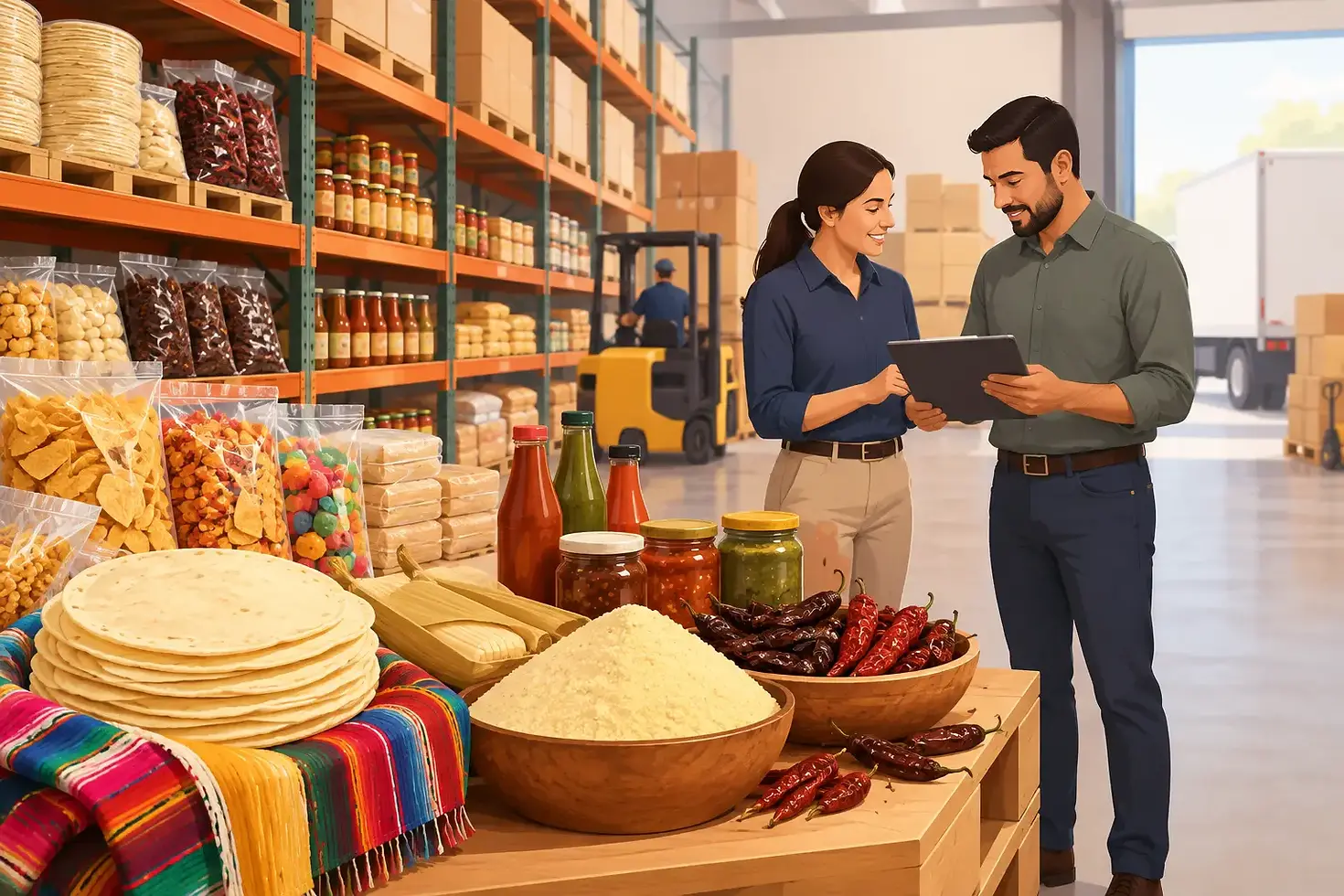
For restaurants, authenticity often begins with foundational ingredients. Consistent access to tortillas, masa harina, dried chiles, sauces, seasonings, beans, condiments, and fish products helps kitchen teams maintain the flavor profiles their guests expect. The priority is not necessarily the largest possible catalog. It is having dependable access to the products that support the menu week after week.
For supermarkets and independent grocers, assortment has a different role. Shoppers may come in looking for a recognizable snack, candy, beverage, cookie, soup, or seasoning they already know. A well-planned selection of established brands and culturally relevant products encourages repeat visits while giving buyers options across price points and household needs.
A capable distributor can support both models. It should carry core pantry products alongside high-turn packaged goods, allowing buyers to build orders that match their shelves, customer base, and available storage.
Authenticity Is a Sourcing Standard
Authenticity is more than a label on a package. It comes from the products a distributor chooses to source, the suppliers behind those products, and the distributor's familiarity with how those items are used and purchased.
When evaluating a supplier, ask where its products come from and whether it has established relationships with Latin American and U.S. vendors. These relationships can make a practical difference when demand shifts or when buyers need recognizable brands rather than generic substitutes. A distributor with roots in Latin food categories is better positioned to recognize why a particular corn flour, chile variety, snack, or seasoning matters to a customer.
That does not mean every business needs the same assortment. A Mexican restaurant may prioritize culinary staples, while a neighborhood grocery may need a broader mix of candy, chips, drinks, cleaning products, natural products, and health care items. The best buying decision begins with your own sales data and customer requests, then matches those needs to a distributor that can replenish them consistently.
Flexible Ordering Protects Cash Flow
Large order minimums can create a quiet inventory problem. Buyers may order more than they can sell quickly just to qualify for delivery or wholesale pricing. The result is crowded storage, cash tied up in slow-moving items, and greater exposure to damaged or aging stock.
Flexible ordering gives businesses more control. It allows a restaurant to purchase the ingredients it needs for current demand and lets a retailer test new products before committing more shelf space. It is especially useful for independent operators, smaller stores, seasonal promotions, and businesses serving several customer communities with different preferences.
No minimum order does not mean every order should be small. Consolidated purchasing can still reduce handling and simplify receiving. The advantage is choice: buyers can place a focused replenishment order when inventory requires it, rather than waiting until they have accumulated products they may not need.
This flexibility also helps buyers react to changing demand. A snack trend, holiday period, local event, or customer request can alter what moves fastest. The right distributor gives you room to adjust without forcing an all-or-nothing purchase decision.
Delivery Coverage Should Fit Your Operations
A product catalog has little value if receiving it is difficult. Before choosing a supplier, confirm where deliveries run, on which days routes are scheduled, and whether pickup is available when your team needs products sooner than the next regular delivery route.
For buyers in Ontario, local coverage can reduce unnecessary complexity. Terragusto Products Inc. provides scheduled Monday through Friday delivery across the Greater Toronto Area, including Toronto, Mississauga, Brampton, Vaughan, Etobicoke, Scarborough, North York, Oakville, Richmond Hill, and Markham, as well as Kitchener-Waterloo and London. Pickup is also available from its Markham location near Highways 404 and 401.
The best option depends on your operation. A high-volume supermarket may benefit from regular planned deliveries that support a weekly receiving schedule. A restaurant handling limited storage may prefer tighter, more frequent replenishment planning. A small retailer may use pickup to fill a gap before a busy weekend. A distributor should make those options clear, without vague promises or complicated ordering rules.
Build an Assortment Around Real Demand
A broad catalog is useful only when it helps you make better purchasing decisions. Start by separating essential items from opportunity items. Essential items are the products your kitchen or customers expect to find consistently. Opportunity items are newer, seasonal, regional, or impulse-driven products that can expand sales when selected carefully.
For a restaurant, essential items may include tortillas, corn flour, chiles, sauces, seasonings, grains, and condiments. For a grocery retailer, the core may also include snack foods, chips, sweets, candy, beverages, cookies, soups, and recognizable packaged brands. The exact balance should reflect your local customers, turnover, storage capacity, and merchandising plan.
A practical review process can keep ordering focused:
Track the products customers request most often, including brands and package sizes.
Review fast sellers and slow sellers separately rather than assuming an entire category performs the same way.
Keep key menu ingredients or shelf staples available before adding experimental items.
Adjust order quantities based on actual movement, promotional periods, and available storage.
This approach does not require complicated software. Even a consistent review of invoices, stock levels, and customer requests can reveal which products deserve more space and which should be ordered more selectively.
Communication Matters When Stock Is Moving
In wholesale food distribution, responsive communication is part of the product. Buyers need accurate answers about product availability, ordering, delivery coverage, and pickup arrangements. When information is unclear, restaurant operators risk menu interruptions and retail buyers risk empty shelves.
Look for a supplier that communicates in practical terms. Can the team help identify the right product category? Can it clarify whether an item is available for an upcoming order? Does it understand the difference between a restaurant's ingredient need and a retailer's merchandising need? Strong service should save the buyer time, not add another layer of follow-up.
Competitive pricing also deserves a realistic view. The lowest unit cost is not always the best value if ordering rules force excess stock or if inconsistent supply causes lost sales. Consider total purchasing value: product quality, order flexibility, reliable local distribution, range of trusted brands, and the time your team spends resolving supply issues.
Choose a Partner That Supports Growth
A dependable distributor should be useful when your business is small and still useful when demand increases. That requires a catalog with depth, established supplier relationships, flexible ordering, and delivery options that align with your operating area.
For restaurants, grocers, and retailers, the goal is straightforward: keep authentic Latin products available without making inventory management harder than it needs to be. The strongest supplier relationships are built on clear expectations, fair purchasing decisions, and service that respects the urgency of running a food business.
To order authentic Latin American products with no minimum order, contact Terragusto Products Inc. Browse the product catalog or reach the team through the contact page, call 905-477-4630, or email info@terragusto.ca. Scheduled delivery is available across the GTA, Kitchener-Waterloo, and London, with pickup available in Markham.


Comments