

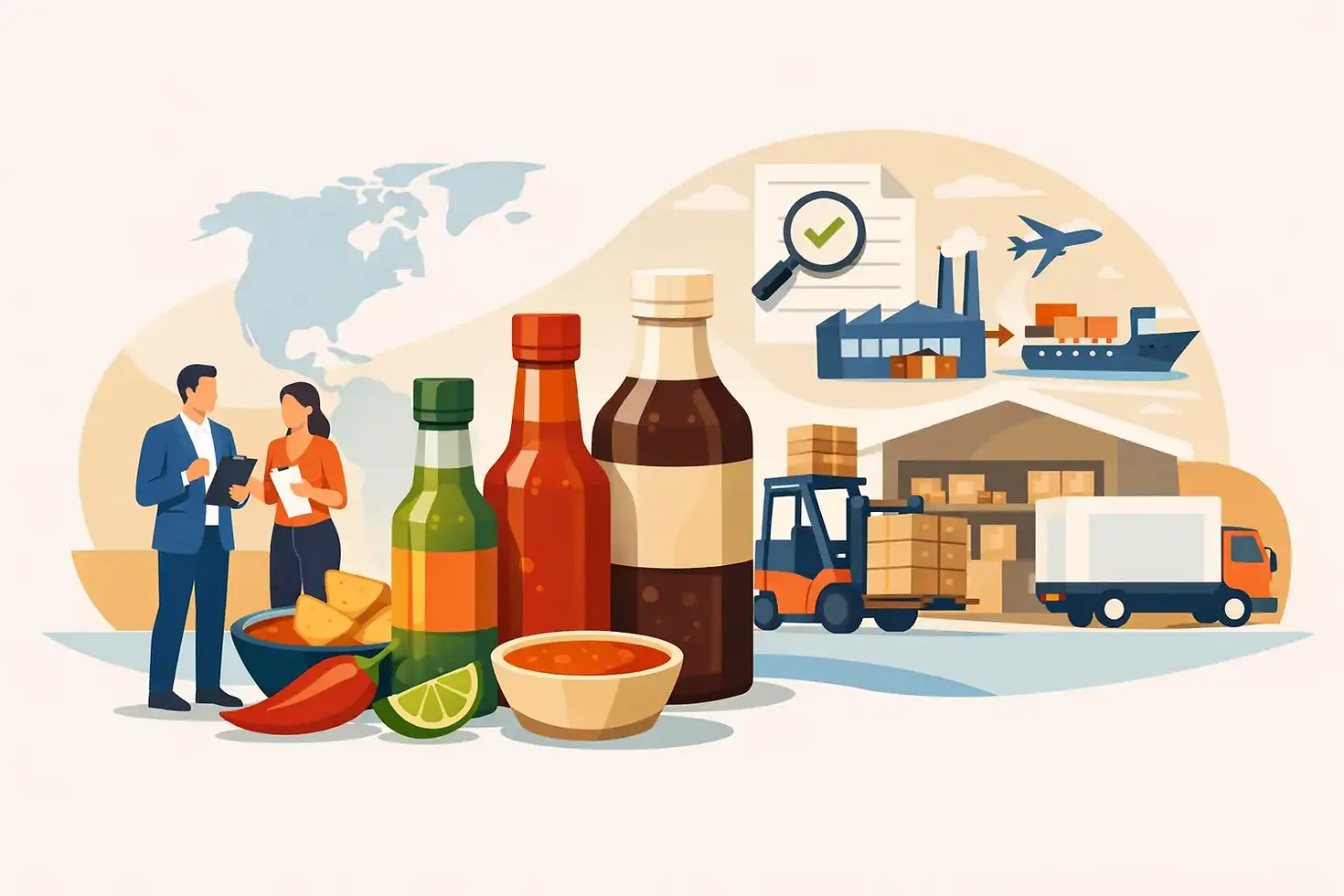
Choosing a Mexican Sauces Wholesale Supplier

A case of salsa that sells through in two days is a good problem. Running out before the next truck arrives is not. For restaurants, supermarkets, and specialty retailers, choosing the right mexican sauces wholesale supplier affects more than shelf variety. It affects menu consistency, reorder timing, margin control, and customer trust.
Mexican sauces are not a single category, and buyers who treat them that way usually run into avoidable issues. A taqueria may need table sauces, cooking sauces, adobo, and chile-based marinades with consistent heat and flavor from case to case. A supermarket may need recognizable brands, multiple pack sizes, and a mix of mainstream and regional products that move across different customer groups. The supplier has to support both authenticity and day-to-day operations.
What buyers should expect from a mexican sauces wholesale supplier
At a minimum, a wholesale supplier should provide reliable stock, fair pricing, and clear communication. In practice, that is only the starting point. Buyers also need a partner that understands the difference between a sauce that works for retail turnover and one that works for back-of-house prep.
For foodservice, consistency matters most. If your red enchilada sauce changes in viscosity, heat level, or salt balance, the kitchen has to adjust recipes on the fly. That slows service and creates variation from one shift to the next. A supplier with established sourcing relationships and quality controls reduces that risk.
For retail, product mix often matters more than any single SKU. Shoppers look for familiar Mexican brands, but they also respond to variety. Hot sauces, green salsas, mole pastes, chipotle sauces, taco sauces, and cooking bases each serve a different occasion. A supplier that carries only a narrow set of products can limit your sales even if pricing is competitive.
The strongest wholesale relationships usually come from suppliers that understand both sides of the equation. They know what sells on a shelf, what performs in a kitchen, and what happens when demand spikes before a weekend or holiday.
Authenticity is not just a marketing word
In Latin food distribution, authenticity has commercial value. Customers notice when a sauce tastes flat, overly sweet, or adapted too far from its original profile. Restaurants lose credibility when familiar dishes no longer taste right. Retailers lose repeat purchases when shoppers try a product once and do not come back for it.
That does not mean every buyer needs the most niche regional item. It means your supplier should understand source markets, brand reputation, ingredient expectations, and category differences. A good assortment balances established favorites with products that reflect real Mexican cooking traditions.
There is also a practical side to authenticity. Products sourced through trusted vendor relationships are less likely to suffer from irregular quality, inconsistent packaging, or substitution problems. When a supplier has a stable network across Mexico, the USA, and broader Latin food channels, buyers get more dependable replenishment.
Pricing matters, but total buying value matters more
Every commercial buyer compares case cost. That is standard and necessary. But the lowest price is not always the best buying decision if it comes with inconsistent availability or weak service.
A better question is how the supplier performs across the full order cycle. Do they keep key items in stock? Can they recommend alternatives when an item is temporarily unavailable? Are deliveries on schedule? Do they communicate early when there is a delay? Those details have real cost implications.
For a restaurant, one missed sauce item can force a menu adjustment, an emergency run to another distributor, or an inferior substitution. For a supermarket, an empty section during a high-traffic period means lost sales and frustrated customers. Saving a small amount per case does not help much if the supply chain around that case is unreliable.
Competitive pricing still matters, especially for high-volume staples. But it should be evaluated alongside fill rate, delivery frequency, assortment depth, and responsiveness.
The product range should fit your business model
Not every buyer needs the same catalog. That is why category depth is so important when evaluating a mexican sauces wholesale supplier.
Restaurants often need larger formats and dependable repeat purchasing on a core group of items. Their questions are usually straightforward. Can this sauce handle line speed? Does the flavor stay consistent? Is the pack size practical for storage and prep? Is the case configuration workable for weekly ordering?
Retailers and supermarkets usually need a broader shelf set. They may carry value options, premium options, family-size bottles, and impulse items together. They also benefit from a supplier that can support adjacent categories such as tortillas, dried chiles, corn flour, seasonings, sweets, canned goods, and beverages. Cross-category buying reduces ordering complexity and can improve freight efficiency.
That is where a broader Latin distributor can offer more value than a narrow specialty source. If one supplier can handle sauces along with key Mexican and Latin staples, buyers spend less time managing fragmented purchasing.
Delivery reliability is part of the product
Many wholesale discussions focus on catalog and pricing first. Those matter, but scheduled delivery is what turns a good assortment into a usable supply program.
For GTA and Ontario buyers, delivery cadence can be the difference between comfortable inventory and constant catch-up. A supplier with regular routes helps customers order with confidence. That is especially important for fast-moving sauces and condiments that are easy to underestimate because they are not always the headline items on an invoice.
Reliable delivery also supports leaner inventory. Buyers do not need to overstock as heavily when they trust the next order will arrive on schedule. That frees up storage space and cash flow. On the other hand, if delivery windows are inconsistent, customers tend to order defensively. That increases holding costs and can create waste on slower-moving items.
This is one reason many Ontario businesses prefer working with a local distribution partner rather than relying on distant suppliers with less predictable lead times. A company like Terragusto Products Inc can support that need with scheduled delivery routes, broad category coverage, and local market familiarity.
Questions worth asking before you place a wholesale order
A strong first order starts with a few practical checks. Ask how often the supplier restocks core Mexican sauce items and whether substitutions are discussed before shipping. Confirm available pack sizes, lead times, and minimum order expectations. If you are a retailer, ask which brands move consistently in similar stores. If you are in foodservice, ask which products are commonly used by restaurants with a menu close to yours.
It is also smart to ask about adjacent categories, even if your immediate need is sauces. Buyers often discover that consolidating tortillas, seasonings, dried chiles, candy, beverages, and packaged groceries with one distributor simplifies operations. The more complete the order, the easier it is to manage delivery and replenish efficiently.
Finally, pay attention to communication. Fast answers usually indicate a supplier that understands commercial urgency. Slow, vague responses before the first order rarely improve after the account is opened.
Common buying mistakes in Mexican sauce wholesale
One common mistake is buying too narrowly. Some operators focus only on their current top seller and ignore secondary items that improve the basket. A retailer that carries one hot sauce but no green salsa, mole, or cooking sauce leaves demand on the table.
Another mistake is overbuying specialty items before demand is proven. Authenticity matters, but assortment still has to match your customer base. Start with strong fundamentals, then expand into more regional or premium lines as movement becomes clear.
A third mistake is treating all suppliers as interchangeable. In this category, product knowledge matters. Buyers benefit from working with a distributor that understands Latin food culture, brand recognition, and practical replenishment needs. That knowledge shows up in recommendations, substitutions, and inventory planning.
How the right supplier supports growth
A dependable wholesale supplier does more than ship boxes. They help buyers keep shelves full, protect recipe consistency, and respond faster to demand. Over time, that reliability creates room to grow. Restaurants can expand menu offerings with more confidence. Retailers can build a stronger Mexican and Latin section without juggling multiple vendors.
The best wholesale relationships are usually straightforward. The product is authentic, pricing is competitive, deliveries are predictable, and communication is fast. That combination is not flashy, but it is what keeps stores stocked and kitchens moving.
If you are evaluating a mexican sauces wholesale supplier, look past the first price sheet. Choose the partner that can support your customers, your inventory, and your operating pace week after week. That is what turns a routine purchase into a stronger business decision.
When the sauces your customers want are available exactly when they need them, the rest of the category becomes much easier to build.


Comments