


Choosing a Latin Grocery Wholesale Supplier

Updated: Oct 2
A missed case of tortillas or a late delivery of dried chiles can disrupt far more than one order. For restaurants, supermarkets, and specialty retailers, the right latin grocery wholesale supplier affects menu consistency, shelf performance, labor planning, and customer trust. When demand is tied to culture, familiarity, and repeat purchasing, supply decisions need to be practical and precise.
What a latin grocery wholesale supplier should deliver
A strong wholesale partner does more than move cases from a warehouse to your door. The job is to keep authentic Latin products available in a way that supports daily operations. That means dependable stock levels, consistent product quality, and a catalog built around real buying patterns rather than a narrow selection of trend-driven items.
For many buyers, authenticity is the first filter. If your customers are looking for recognized Mexican staples, familiar seasonings, packaged grocery products, sweets, beverages, and pantry basics, substitutions usually do not work well. Shoppers notice when brands change. Chefs notice when flavor profiles shift. A supplier that understands Latin food categories from the ground up helps protect that consistency.
At the same time, authenticity alone is not enough. A supplier also needs operational discipline. Orders should be accurate, communication should be fast, and delivery schedules should be reliable. If a distributor cannot support replenishment, even an excellent product mix becomes hard to manage.
Why product depth matters more than a long catalog
Many distributors claim variety. What matters is whether that variety reflects how Latin grocery and foodservice businesses actually buy. A useful catalog is not just broad. It is balanced across core staples, high-turn packaged goods, complementary categories, and practical add-on items that simplify ordering.
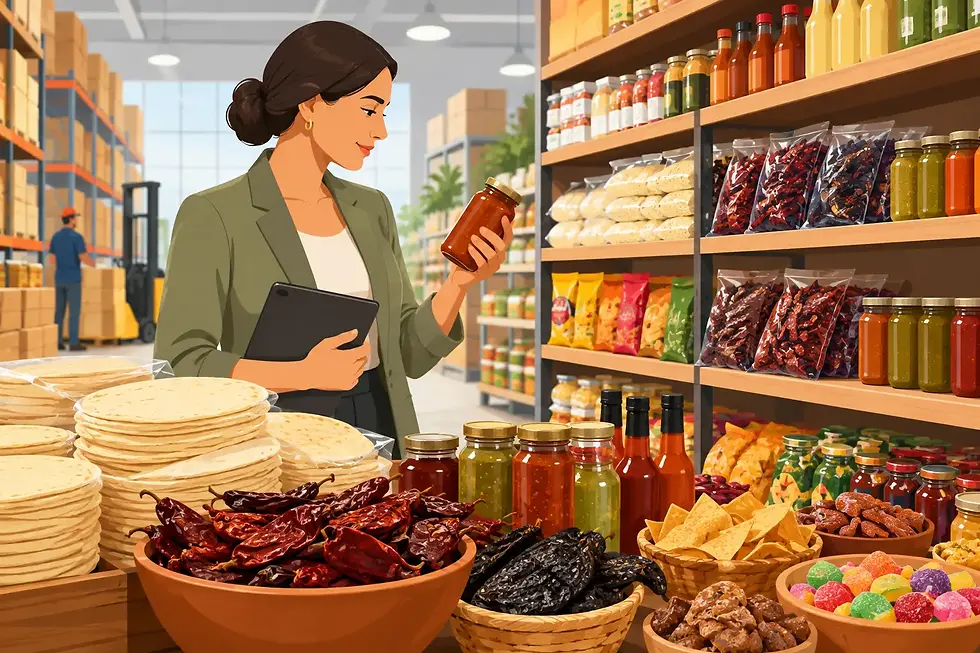
For example, tortillas, corn flour, sauces, dried chiles, and seasonings are obvious anchor categories for many Mexican and broader Latin food programs. But buyers often need more than ingredients for recipe execution. They may also need candy, cookies, soups, grains, condiments, fish, beverages, natural products, cleaning products, and health care items for a fuller retail assortment or a more efficient back-of-house purchasing process.
That is where a one-stop supplier creates real value. Instead of splitting orders across multiple vendors, buyers can consolidate more of their weekly needs with one distributor. This reduces admin time, simplifies invoice management, and can improve forecasting. The trade-off is that not every supplier with a broad catalog is equally strong in every category, so buyers should look for depth in the products that drive their business first.
Authentic sourcing is a business issue, not just a branding issue
Authenticity is often treated as a marketing term, but for wholesale buyers it is a business requirement. Established sourcing relationships in Latin America and the United States can affect product integrity, availability, and pricing stability. A supplier with long-standing vendor connections is generally in a better position to maintain continuity when demand spikes or market conditions change.
This matters especially in categories where customers are brand loyal. A family shopping for familiar pantry items is rarely looking for a generic replacement. A restaurant serving regional dishes cannot always swap one chile, seasoning blend, or tortilla format for another without changing the final result. When a supplier understands these distinctions, the buyer spends less time correcting avoidable issues.
There is also a trust factor. Buyers need confidence that the products they receive match what their customers expect. That includes packaging quality, shelf readiness, and the kind of category knowledge that helps prevent ordering mistakes. A wholesale partner with roots in Latin food distribution can usually spot the difference between a product that merely fits the label and one that truly fits the market.
Delivery reliability shapes profitability
The most attractive case price loses value quickly if delivery is inconsistent. For foodservice operators, late or incomplete shipments can create emergency purchasing, menu substitutions, and excess labor. For supermarkets and specialty grocery stores, out-of-stocks mean missed sales and disappointed repeat customers.
That is why scheduled delivery matters. Daily routes and predictable replenishment windows help buyers plan purchasing more accurately. They also reduce the need to overstock slow-moving items just to protect against supply uncertainty. Better delivery discipline often leads to better inventory discipline.
There is an important nuance here. Fast delivery is useful, but consistency is usually more valuable than speed alone. A buyer can plan around a known schedule. It is much harder to plan around a supplier that delivers quickly one week and unpredictably the next. The best wholesale relationships are built on routines that make operations easier, not just promises that sound good during onboarding.
Pricing should be competitive, but not isolated from service
Every buyer wants competitive pricing, and they should. Margins are tight in grocery and foodservice, especially in staple categories where price sensitivity is high. But price should be evaluated alongside fill rate, delivery reliability, product authenticity, and order accuracy.
A lower-cost supplier can become more expensive if they create stock gaps, quality complaints, or extra administrative work. On the other hand, the highest-priced option is not automatically the best choice either. Buyers need a supplier that balances fair pricing with dependable execution.
A practical way to assess value is to look at total purchasing friction. How often do you need to follow up on missing items? How often do substitutions create customer complaints? How much staff time goes into managing multiple vendors for related categories? When a supplier reduces those problems, the operational savings are often just as meaningful as a favorable unit cost.
What Ontario buyers should ask before committing
For buyers across the GTA and broader Ontario market, local distribution capability matters. Product range is important, but geography still affects lead times, service consistency, and replenishment flexibility. A supplier with established delivery routes in your area is better positioned to support regular volume and urgent needs than one that serves the region only occasionally.
Before opening or expanding an account, it helps to ask direct questions. Which product categories are stocked consistently, and which are special-order dependent? How often are deliveries scheduled in your area? What brands and origin points define the core catalog? How are shortages handled? Can one order cover both grocery staples and complementary non-food items?
These questions are simple, but they reveal a lot. A capable supplier should answer clearly and without hesitation. Commercial buyers do not need vague assurances. They need practical details that support ordering decisions.
The advantage of working with a specialized partner
A specialized distributor often understands category demand in ways a general-line supplier does not. They know which items are true staples, which products drive holiday and seasonal spikes, and which brands customers ask for by name. That knowledge improves recommendations, forecasting, and account support.
For a restaurant, this can mean more reliable access to the ingredients that define the menu. For a supermarket or specialty store, it can mean a better mix of recognizable brands and complementary products that increase basket size. For both, it means fewer compromises.
Terragusto Products Inc serves this need by combining authentic Latin product knowledge with practical wholesale support across Ontario. Its model reflects what commercial buyers actually need - broad category coverage, competitive pricing, scheduled delivery, and responsive communication from a distributor that understands the cultural and operational side of the business.
A supplier relationship should make buying easier
The best latin grocery wholesale supplier is not simply the one with the biggest catalog or the lowest advertised price. It is the one that helps you stay in stock, protect product quality, and buy with confidence week after week. That takes authentic sourcing, dependable logistics, and service that respects the realities of running a restaurant, supermarket, or retail operation.
If your current supply setup creates too much uncertainty, that is usually a sign to reassess the partnership rather than keep absorbing the cost of inconsistency. Buyers who choose carefully tend to see the difference quickly - better shelves, smoother kitchens, fewer last-minute problems, and a stronger customer experience where it counts most.


Comments